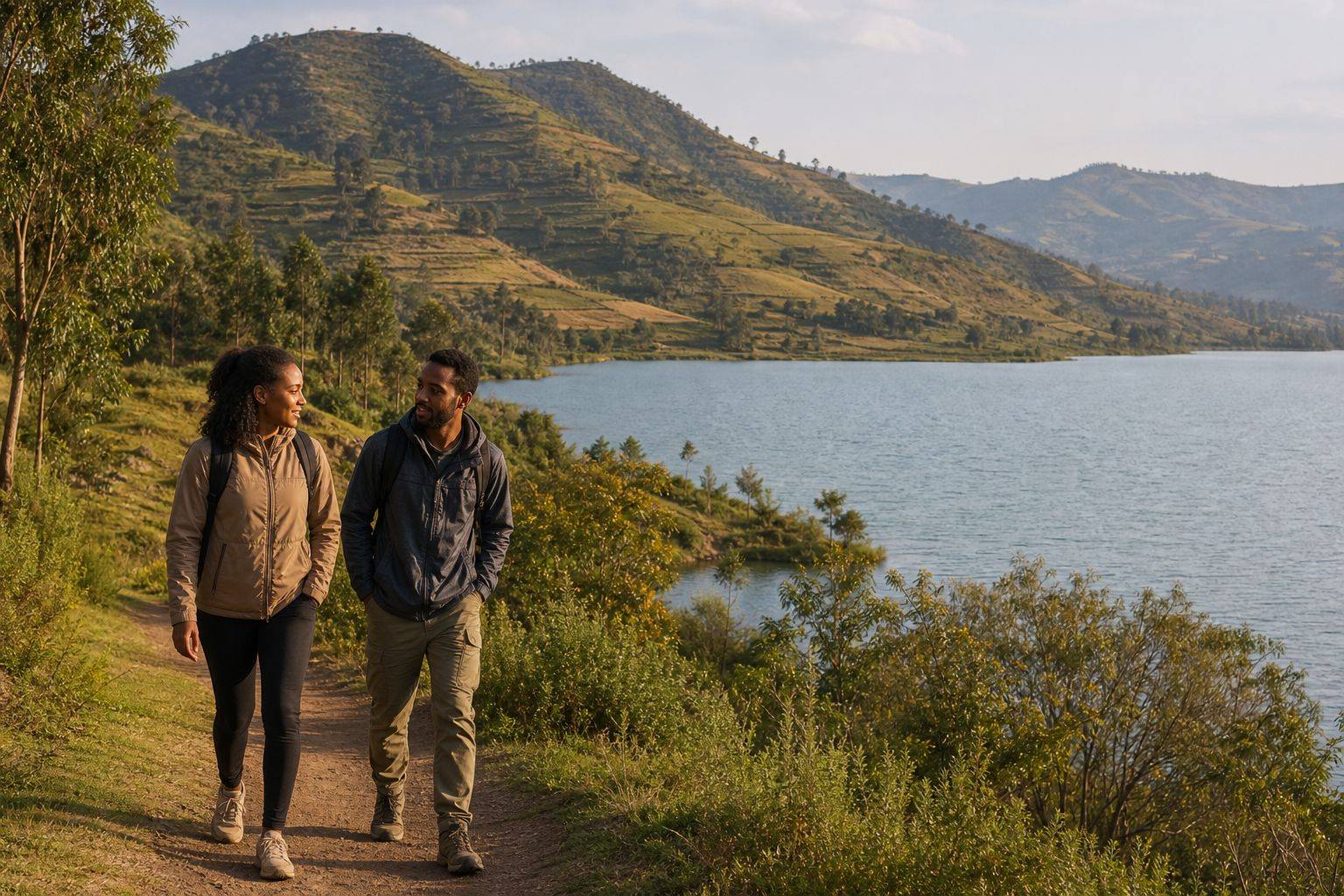
An illustrative scene of two travelers walking beside a highland lake outside Addis Ababa.
Leaving Addis for one night can change the pace of a whole week. Within reach of the capital are crater lakes, forest trails, farming communities, and important religious sites. The difficult part is not finding an idea. It is choosing a trip that still works with current road conditions, daylight, weather, and your actual budget.
This guide offers a short list rather than pretending every nearby attraction is equally easy. Transport schedules, entrance arrangements, and security conditions can change quickly. Every route in this article needs a fresh check before travel. If official advice or a trusted local contact says a road is not suitable, choose another plan.
Start with the kind of weekend you want
A useful choice begins with one question: what do you want to do when you arrive?
- Choose Bishoftu if you want an easy change of scenery, lake views, restaurants, and a wide range of accommodation.
- Consider Wenchi if you want a longer nature outing with walking and community tourism.
- Look at Menagesha Suba if the main goal is a forest walk close to the capital.
- Consider Debre Libanos only after checking current access and security, especially if religious history and dramatic highland scenery interest you.
Do not choose only from social media photographs. A beautiful view may require a private vehicle, a local guide, an early departure, or a level of fitness that a short caption never mentions.
Bishoftu for a simple lake break
Bishoftu, also widely called Debre Zeit, is southeast of Addis Ababa. Ethiopia’s official tourism site describes it as a nearby destination known for several crater lakes. That makes it the most flexible option in this list.
You can build a day around one lake view and a relaxed meal, or stay overnight and move slowly. Some lake edges are occupied by hotels or resorts, while public access differs from lake to lake. Decide before leaving whether you want a simple town visit, a paid resort day, or an overnight stay. Those are different budgets.
The easiest version of the trip is not to chase every lake. Pick one base, confirm whether visitors can enter without booking a room, and ask exactly what any day fee includes. Bring a layer for the evening. The temperature can feel cooler once the sun drops, even after a bright afternoon.
Swimming deserves caution. Water quality, depth, access, and safety equipment vary. Do not assume a lake is safe because other people are near it. Ask the property or local authority about current conditions and stay out if the answer is vague.
Confirm transport time, fares, resort entry rules, and lake access before you leave, since all of these can change from what an older post describes.
Wenchi for a fuller nature weekend
Wenchi, also written Wonchi, lies west of Addis Ababa in Oromia. UN Tourism describes the area as a volcanic landscape with a crater lake, highland vegetation, local farming, and community managed tourism. It is farther from the city than Bishoftu, so it works better as a long day with a very early start or as an overnight trip.
The landscape is the reason to go, but the visit involves more than standing at a viewpoint. Routes can include steep walking, local guide arrangements, and boat or horse options depending on current operations. Ask what the chosen route contains, how long it takes, and which costs are separate. A low headline price can become less useful if transport, guide service, and activities are all added later.
Wear shoes with grip. Take rain protection in the wet season and sun protection throughout the year. Carry water and a snack, but buy local food or services when practical. Community tourism works best when visitors pay fairly and follow local guidance.
UN Tourism lists the village at about 150 kilometres west of Addis Ababa, but distance does not predict driving time. Road condition, traffic, weather, and the final approach matter. Confirm current road access, local tour arrangements, guide fees, and accommodation before you commit to the trip.
Menagesha Suba for a forest day
Menagesha Suba Forest is often suggested for people who want trees and walking without committing to a distant overnight trip. The attraction is simple: a quieter day among highland forest, with routes that may suit different energy levels.
Simple does not mean unplanned. Confirm the correct entrance, opening arrangement, guide requirement, and route condition. Ask whether your vehicle can reach the starting point in the current weather. A road that is manageable in a dry month can feel very different after heavy rain.
For a first visit, choose a modest route and start early. Take water, a packed lunch, a waterproof layer, and a charged phone. A downloaded map is useful when mobile data weakens, but it is not a substitute for local direction. Stay on established paths and take all rubbish back out.
Confirm the current entry procedure, guide availability, road access, and any camping permission before you plan a full itinerary around it.
Debre Libanos for history and highland scenery
Debre Libanos is an important Ethiopian Orthodox monastery north of Addis Ababa. Visitors often combine the religious site with viewpoints in the surrounding highlands. This is not only a scenic stop. It is an active place of worship, so clothing, photography, and behaviour should reflect that.
Wear modest clothes. Ask before photographing clergy, worshippers, interiors, manuscripts, or religious objects. Keep conversation quiet around services. A local guide can help separate the history of the monastery from popular stories that may be repeated without context.
This route needs a particularly careful current safety check. Conditions outside Addis can change, and general familiarity with the destination does not guarantee that the road is suitable on a specific weekend. Use recent official travel advice, speak with a reputable operator or trusted resident, travel during daylight, and leave the route with someone in Addis. Confirm road access, visitor rules, guide arrangements, photography permissions, and nearby viewpoint access before you finalize the plan.
How to keep the trip affordable
Transport usually shapes the budget more than the entrance ticket. A shared vehicle can lower the cost, but only when the group agrees on the route, waiting time, fuel, and driver expenses in advance. Public transport in Addis Ababa may be cheaper, yet it can also reduce the time available at the destination and make the return less predictable.
The budget travel guide for Ethiopia gives a wider method for comparing transport, rooms, food, guide costs, and an emergency reserve.
Write down the whole expected cost:
- Travel to the departure point in Addis
- Intercity transport or vehicle hire
- Driver allowance, fuel, and parking if relevant
- Entrance and guide fees
- Meals and water
- Activities such as a boat ride
- Accommodation
- A reserve for delays or a changed return plan
Do not rely on an old online price. Ask for a current amount and what it covers. If a quote is given by phone, confirm it again in writing when possible.
Pack for the road, not the photograph
A small bag is enough for most of these trips. Useful items include:
- Identification and a copy stored separately
- Cash in smaller notes
- Water and a basic snack
- Sun protection
- A warm layer and rain protection
- Any regular medicine
- A charged phone, power bank, and downloaded map
- Tissue and hand cleaner
- A small rubbish bag
Cash remains important outside major urban businesses because card and cash machine access can be unreliable. Keep money in more than one place and avoid displaying the full amount.
Safety should decide the route
The security situation in parts of Ethiopia can shift with little notice. Road closures, demonstrations, local conflict, or communication interruptions may affect a route that was normal a week earlier. The practical response is not panic. It is a fresh check.
Before leaving:
- Read current official travel advice for the exact area and road.
- Ask a trusted local contact or reputable operator about conditions that morning.
- Travel in daylight and avoid an arrival that depends on a late connection.
- Share the route, vehicle details, and expected return time with someone.
- Carry enough water and cash for a delay.
- Turn back if you meet an unattended roadblock or conditions feel wrong.
Foreign visitors should also check whether their insurance covers the chosen area and activity.
A realistic two day rhythm
The best short weekend does not need a long checklist. Leave Addis early, choose one main activity, eat without rushing, and allow the second day to remain light. Trying to combine a lake, a forest, a monastery, and several viewpoints usually creates more vehicle time than enjoyment.
For Bishoftu, one lake area and one overnight base may be enough. For Wenchi, let the landscape and community visit be the centre of the whole trip. For a forest day, return before dark rather than adding another distant stop.
The right choice is the one you can reach safely, afford honestly, and experience without racing. Confirm the current details, then keep the plan small.