 Addis after dark, looking down one of the main avenues. (Photo: Gift Habeshaw / Unsplash.)
Maybe you are thinking about moving to Addis Ababa, or maybe you just landed and you are trying to figure out which way is up. I have lived here my whole life, and honestly, most of what you find online about this city, including the expat forums, is either outdated, written by someone who visited for a week, or too formal to be much use. This is the stuff I would actually tell a friend who is moving here, not the version you get from a tourism brochure. If you have ever wondered what life in Addis Ababa is actually like day to day, this is that answer. We will get into housing, getting around, what things really cost versus what people assume they cost, and the small things nobody explains until after you have already made the mistake yourself.
Start with two things that surprise almost everyone in the first week. The first is the air. At over 2,300 metres, the city sits high enough that a single flight of stairs can leave you slightly winded for the first few days. The second is the time. Ask a local to meet at “two o’clock” and you may both arrive certain the other is wrong, because Ethiopia runs on its own clock that starts counting at dawn. Neither is a real problem once you know about it. Both are the kind of thing no one tells you until you are standing there, confused.
Getting your bearings: altitude, time, and calendar
The altitude is real but manageable. Give yourself a slower first few days, drink more water than usual, and go easy on alcohol until you adjust. Most people feel normal within a week.
The clock catches everyone. Ethiopian time counts hours from sunrise, so what a phone shows as 7:00 a.m. is “1 o’clock” in local speech, and 1:00 p.m. is “7 o’clock.” Because Addis sits near the equator, sunrise and sunset barely move through the year, so the system stays consistent. When you make plans, confirm which one you mean: “European time or Ethiopian time?” People switch between the two all day.
The calendar is the other surprise. Ethiopia uses its own calendar, which runs several years behind the Gregorian one and has 13 months. You will see it on official documents, receipts, and holiday dates. You do not need to master it, but do not panic when a date looks wrong. It is not.
Getting around the city
Addis is spread out, and most newcomers rely on a mix of options depending on the day.
Minibuses, the blue and white shared vans, are the backbone of local transport. They run fixed routes, a fare collector calls out destinations, and you pay a set fare per stretch. They are cheap, with a short trip starting around 15 birr, and they are everywhere. The catch is that you need to know the route names, and they fill up fast at rush hour.
City buses, the larger public buses, cover longer routes for even less money, though they are slower and can be crowded.
The light rail runs on two lines across the city. The fare is flat and low, no more than about 10 birr, and it skips road traffic entirely on its route. If your trip lines up with a station, it is often the fastest option at peak hours.
Ride hailing apps are how a lot of newcomers get around at first, because you do not need to know routes or negotiate a price. A trip across town usually runs a few hundred birr (see the cost reference below). Several apps operate in Addis. Download one or two before you arrive, then add a local payment method once you have a SIM. For airport pickups and evenings, this is the least stressful choice.
One practical warning. Traffic in Addis is heavy and hard to predict, especially in the late afternoon. Whatever transport you take, pad your timing. A trip that is easy at 10 a.m. can double at 5 p.m. For the full picture on fares, routes, and how to actually flag down a minibus, see the guide to public transport in Addis Ababa.
Where people live
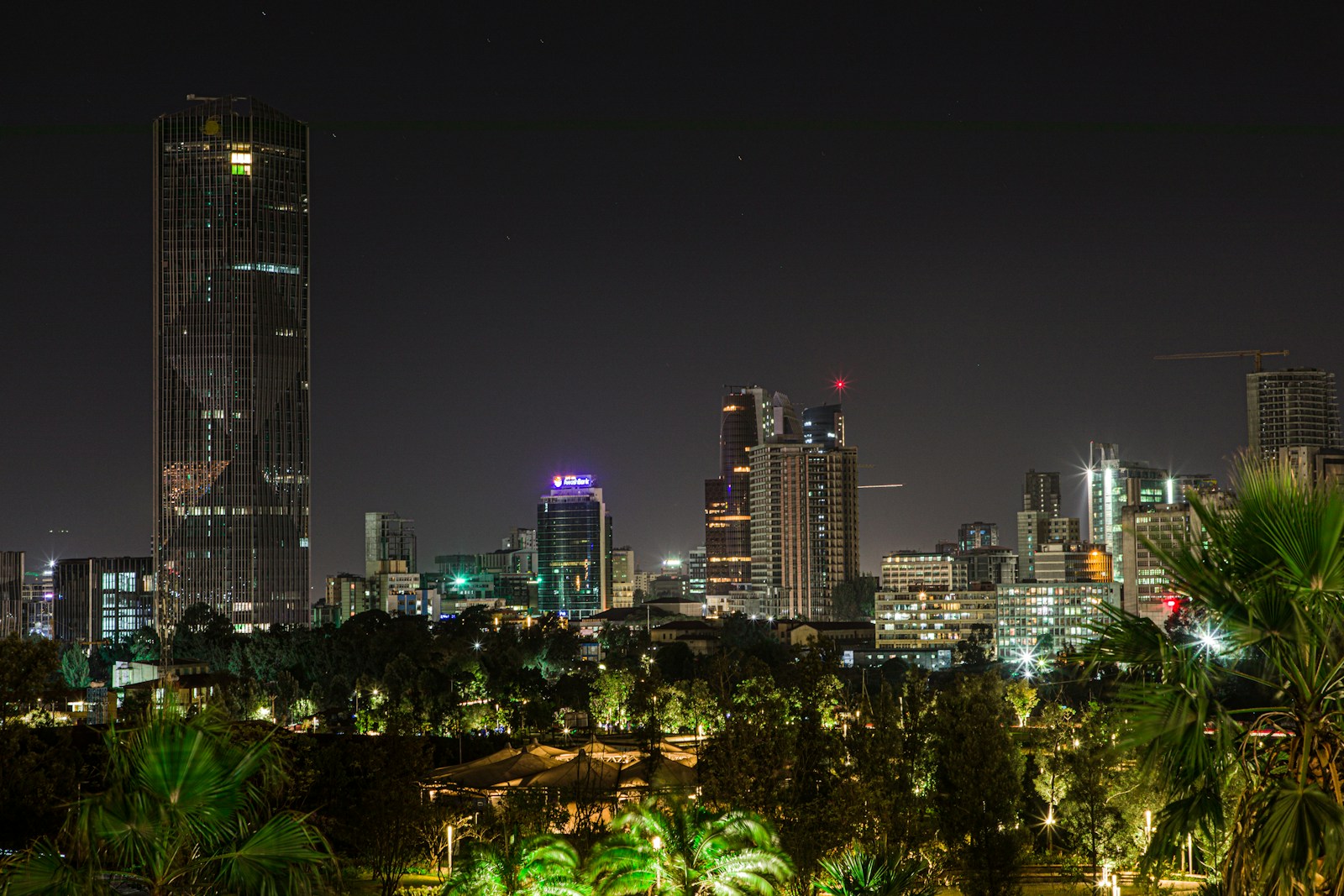 The Addis skyline keeps growing, especially around the newer financial district. (Photo: Abenezer Shewaga / Unsplash.)
You do not have to memorize the whole map, but a few area names come up constantly:
- Bole: near the airport, more modern, full of cafes, apartments, and international restaurants. Popular with newcomers and diaspora, and usually pricier. It is also where you will find some of the best study and work cafes in the city.
- Old Airport: quieter and greener, home to many embassies and international organizations.
- Piassa: the older heart of the city, dense and full of character, with historic shops and churches.
- Kazanchis, Sarbet, CMC, Gerji, Summit, Megenagna: a spread of residential and mixed areas that trade off price, commute, and how built up they are.
How I would choose between neighborhoods
There is no single best part of Addis. The useful question is: where do you need to be most mornings? A cheaper apartment stops feeling cheap when you spend hours crossing the city, so choose around your regular commute before you choose around a view or a fashionable address.
- Bole is the easiest first landing if being near the airport, restaurants, cafes, and services matters more than keeping rent low. The downside is that busy streets can be noisy and traffic can make a short distance feel much longer.
- Kazanchis or Megenagna can work well if you need connections to several parts of the city rather than one specific corner. Both are active areas with homes and businesses, so the experience can change from a quiet side street to a congested main road within a few blocks.
- Old Airport or Sarbet may suit someone who wants a calmer residential feel and does not need to be in Bole every day. Check the exact trip to work, though; neighborhood names cover large areas and the wrong side of one can add a lot of time.
- CMC, Gerji, or Summit are worth comparing if you prefer newer residential development or need to be on the eastern side of Addis. They can be convenient for an eastern Addis routine and inconvenient for a daily commute across town.
Before paying a deposit, visit the building once during the day and once around the time you would normally travel home. Test the mobile signal inside the rooms, turn on the taps, ask how water is stored during interruptions, and find out what happens when the electricity goes off. Also check the walk from the building to the nearest road after dark. These details tell you more about daily life than polished listing photos do. If possible, make the trip from home to work yourself before signing anything.
Rents vary a lot by area, building age, and whether a place comes furnished. A basic single room can start around 8,000 birr a month and climbs from there. Rather than guess, ask two or three sources once you are on the ground: a local colleague, a trusted broker (delala), and an online listing group. Compare what they tell you. Prices move, and the “foreigner price” is real, so a local reference point protects you. If you are budgeting as a student specifically, the full cost of living breakdown goes deeper on rent, food, and the rest of a monthly budget.
Money and staying connected
Ethiopia’s currency is the birr. Cash still runs daily life, from small shops to minibuses to markets, so keep some on you. At the same time, mobile money and bank apps have grown quickly, and you will want to get set up early.
Two errands in your first week make everything else easier:
- Get a local SIM. Bring your passport, because registration requires ID. Most people use Ethio telecom, the state operator, which has the widest coverage. Safaricom arrived recently as a competitor and still has a smaller share, so it is worth asking locals how its coverage is in your area before you commit. Buy a data package rather than paying as you go (see the cost reference below).
- Sort out money. Ordinary ATMs do not accept foreign cards. The ATMs that usually do are inside international hotels, roughly four stars and above, so plan around that if you arrive relying on a foreign card. For daily spending, do not depend on it. Opening a local bank account (you will usually need ID and a local address or reference) gives you a card, an app, and the mobile money transfers that many businesses now prefer.
Once you have a local number, mobile money lets you pay for a lot of things straight from your phone. It is one of the more useful things to set up early.
A quick cost reference (as of July 2026)
| Item | Typical cost |
|---|---|
| Minibus, short trip (up to about 3 km) | from 15 birr |
| Light rail, single ride | up to 10 birr |
| Ride hailing, across town | about 350 to 425 birr on clear roads, 400 to 500 birr in traffic |
| Mobile data, monthly (Telebirr) | 1.2 GB 82 birr, 4.8 GB 280 birr, 12 GB 550 birr, 24 GB 950 birr, 60 GB 1,500 birr |
| Mobile data, unlimited passes (Telebirr) | daily 95 birr, weekly 615 birr, monthly 2,000 birr |
| Rent, basic single room | from about 8,000 birr a month |
Short unlimited passes also exist, at about 20 birr per hour and 33 birr for two hours. Note that buying data through airtime instead of Telebirr costs roughly 15 percent more. Prices move, so treat these as a snapshot and check current rates before you quote them to anyone.
Food and the daily rhythm
Injera with a range of stews is the everyday plate, and it is easy to eat well without spending much. One rhythm to know: many Ethiopian Orthodox Christians fast on Wednesdays and Fridays, which means a lot of restaurants serve vegan “fasting food” (bayenetu) on those days. If you are vegan or vegetarian, those are great days to eat out. If you had your heart set on meat, a menu might look different than you expect.
Coffee runs through daily life, from a quick macchiato at a tiny cafe to the slower home coffee ceremony you will probably be invited to at some point. Saying yes is a good way to build a relationship with neighbors and colleagues.
Weather and what to pack
Addis has a mild climate for most of the year, close to spring weather, thanks to the altitude, but two things still surprise people. Evenings get genuinely cool, so pack layers even if you pictured constant heat. And there is a main rainy season that runs from early July to late September, when afternoon downpours are common. A compact umbrella and shoes that handle wet, uneven pavement earn their place in your bag.
Common mistakes newcomers make
- Trusting one price. Always get a second local reference for rent, furniture, or any big purchase.
- Relying only on a foreign card. Carry cash and set up local payment early, and remember that only ATMs at four star hotels and above tend to take foreign cards.
- Underestimating traffic. Build in buffer time, especially late afternoon.
- Ignoring the clock and calendar difference. Confirm which time system you are using when you make plans.
- Forgetting ID for the SIM shop. No passport, no SIM.
- Packing for heat only. You will want layers and rain gear from July to September.
Your first week settling in checklist
- Buy and register a local SIM (bring your passport)
- Download a ride hailing app and add a payment method
- Get some cash and locate reliable ATMs near you
- Start a local bank account or mobile money setup
- Learn the names of the areas between home and work
- Note your nearest light rail or minibus route
- Save a few trusted numbers: a colleague, a driver, your landlord or broker
- Learn a handful of Amharic greetings, which go a long way
Settling in takes a few weeks, not a few days
The first days in Addis feel like a lot at once: new money, new routes, a new clock. Give it two or three weeks and most of it turns into routine. The fastest way through the learning curve is not an app. It is people. A colleague who tells you the fair rent, a neighbor who explains which minibus to wave down, a shopkeeper who starts to recognize you. That is what turns a confusing city into a place you live. Start with the checklist above, ask plenty of questions, and let the rest come.