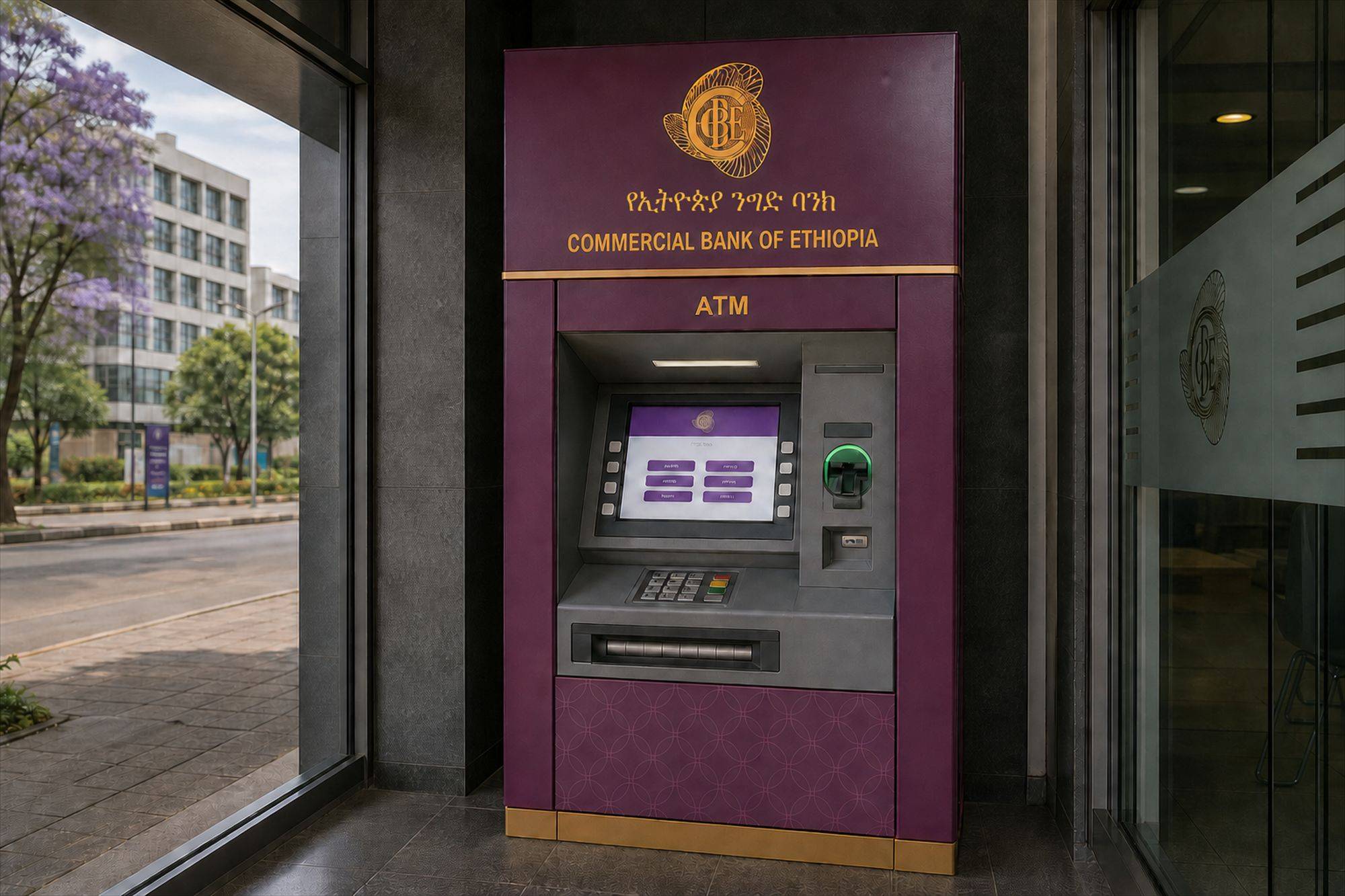
 An ATM near campus is useful, but students should still compare fees, app reliability, and support.
A bank can offer an attractive youth account and still be a poor fit if its nearest branch is across the city, the app fails when you need to pay rent, or replacing a card takes several visits.
That is why this guide does not declare one bank the winner for every Ethiopian student. The National Bank of Ethiopia’s current directory contains many licensed banks, and their products, fees, apps, and branch networks change. The better choice depends on campus, income, family transfers, digital habits, and whether you expect international payments.
To give you a real starting point rather than only a method, the banks students in Ethiopia most commonly end up comparing include Commercial Bank of Ethiopia (the largest, state owned, with the widest branch and ATM network in the country), Awash Bank, Dashen Bank, Bank of Abyssinia, Cooperative Bank of Oromia, Wegagen Bank, Zemen Bank, and Hibret Bank. This is not a ranking, and it is not the full list of licensed banks, just the names a student is likely to actually hear discussed near most campuses. Use it as your shortlist to check against the current NBE directory below, not as a final answer.
Use the comparison below, then test the two strongest options near you.
Begin with the jobs your account must do
Make a short list before visiting a branch. A typical student may need to:
- Receive money from family
- Pay rent, fees, transport, and food
- Withdraw small amounts without travelling far
- Move money to another bank or mobile wallet
- Save part of a scholarship or part time income
- Receive a salary after graduation
- Pay online where lawful and supported
- Document freelance or business income
Rank those needs. If cash access matters most, branch and ATM coverage may beat a slightly better savings rate. If most payments happen by phone, app reliability and transfer charges may matter more than a free card.
The account that fits first year may not fit your first job. It is fine to change or add an account later.
Only compare licensed institutions
Start with the National Bank of Ethiopia’s official bank directory. It lists licensed banks and their contact information. Do not choose from a social media page that merely uses the word “bank,” and do not send money to somebody who offers to open an account on your behalf.
The NBE website reported 32 banks in July 2026, but that number is time sensitive. Check the official directory rather than repeating the number after it changes.
Mobile wallets are a separate category. NBE also maintains a directory of licensed payment instrument issuers and system operators. A wallet can be useful, but it is not automatically a replacement for every bank function.
Compare the branch and ATM reality
Open a map and check where you actually spend time:
- Campus or training centre
- Home or dormitory
- Work placement
- The area where you pay rent
- The transport route between them
Then visit the nearest branch at a normal busy time. Is there a working ATM? Is the queue manageable? Can the branch handle account updates and card problems, or does it direct customers elsewhere?
Ask whether another bank’s ATM can be used and what it costs. Also ask what happens when cash is debited but the machine does not dispense it. The complaint process matters more than a glossy card design.
For a student outside Addis Ababa, regional coverage can decide the choice. A bank that feels convenient near one university may be difficult to use near another.
Test the mobile banking experience
Do not judge an app from screenshots. Ask a current customer to describe an ordinary month, or open the account and test low value tasks yourself. If you have not settled on a wider set of apps for daily life yet, the best apps for daily life in Ethiopia covers banking apps alongside the rest.
Check:
- Registration and device change process
- Login reliability
- Balance and transaction history
- Transfer to another account at the same bank
- Transfer to another bank
- Wallet transfer or bill payment, if offered
- Clear confirmation before sending
- Receipt or reference after sending
- Password or PIN recovery
- Customer support when a transfer is pending
Some services may also work through USSD, which can help when mobile data is unreliable. Confirm the current code from the bank’s official channel and never enter a PIN after following an unexpected link.
The separate mobile banking guide for Ethiopia explains how to set up and use an account more safely.
Count the fees you will actually pay
A “free” account may still charge for transfers, cards, replacements, statements, alerts, or inactive status. A higher savings rate may not compensate for repeated transaction charges on a small balance.
Ask for the current tariff and write down:
- Opening and minimum balance
- Account maintenance
- Debit card issue and renewal
- Card replacement
- Same bank transfer
- Other bank transfer
- ATM withdrawal
- SMS alerts
- Paper statements or confirmation letters
- Dormant account reactivation
- Account closure
Collect the actual prices, rates, and minimum balances from the bank’s official current tariff rather than from this article, a comment section, or an old branch leaflet, since those figures change and only the bank’s own published tariff is reliable on the day you open an account.
To compare fairly, estimate your own month. If you expect eight other bank transfers, four withdrawals, and one wallet transfer, multiply those actions by the current charges. That figure is more useful than a single headline fee.
Look at youth and student products carefully
Real numbers help more than a general warning, so here is what three of the shortlisted banks publish right now.
Commercial Bank of Ethiopia’s ordinary savings account requires the holder to be 18 or older, with a renewed identification card and two passport photographs. CBE’s published annual interest rate is 7 percent (verified 6 August 2026). Per CBE’s own Key Facts Statement, the account can open at zero birr if it is funded to ETB 100 within 15 days, the minimum balance to maintain is ETB 100, there is no opening fee, a first debit card costs ETB 50, a replacement card costs ETB 50, and PIN replacement costs ETB 20 (verified 6 August 2026). CBE’s youth, teen, education, and women’s accounts are listed at 7.125 percent interest, and its wedding and holiday accounts at 7.5 percent (verified 6 August 2026). One caveat worth passing on: CBE’s own Key Facts Statement leaves the effective date field blank, so treat these as the bank’s officially published figures and still confirm them at a branch before relying on them.
Cooperative Bank of Oromia’s ordinary savings account needs an ETB 50 opening deposit, or it can open at zero if at least ETB 25 is deposited within one month, along with a renewed identification card and two photographs (verified 6 August 2026). It also offers a Dargago Youth Mudarabah account aimed at ages 15 to 29, especially students, but the bank does not publish an exact minimum balance or profit rate for that product on its own page, so that detail needs a branch check.
Bank of Abyssinia’s ordinary savings account can also open at zero, but the balance must reach ETB 25 within one month and stay at ETB 25 to earn interest. Its product page publishes 7 percent interest (verified 6 August 2026). Its Afla youth account, for ages 18 to 29, advertises 0.5 percentage points above ordinary savings. The product page says a student’s debit card cost is covered, but the bank’s separate published tariff sheet lists the Afla domestic Visa card at ETB 100 (verified 6 August 2026), so do not assume a guaranteed free card. Ask the bank directly whether that is an immediate waiver or a later reimbursement.
These numbers also matter because the rules changed recently. Since 9 January 2026, each bank’s board sets its own deposit interest rates under a National Bank of Ethiopia interest rates directive. There is no single, nationally fixed savings rate anymore, and rates genuinely vary from one bank to another.
A labelled youth account is not automatically the best deal. Compare it with the bank’s ordinary savings account:
- Is there an age limit?
- Does the benefit continue after graduation?
- Is student identification required each year?
- Is the card genuinely included?
- Does the account restrict withdrawals?
- Is the stated return conditional on maintaining a balance?
- What happens when the account holder leaves the target age group?
Ask the employee to show the terms in writing. Take the document home if possible and read it without the pressure of a queue.
Documents and account opening
Identification and customer checks are required, but the exact document list can vary by account, age, institution, and current regulation, so confirm the specific list with your chosen bank rather than assuming one branch’s requirements match another’s.
Before visiting, call the bank’s official number and ask what to bring. Depending on the product, the list may include government identification, a student ID or university letter, a photograph, contact details, address information, and an opening deposit. A minor may need a parent or legal guardian.
Use your legal name consistently. Check the spelling, date of birth, phone number, and account number before leaving. If the bank registers mobile service at the same time, test it while support is nearby.
Never hand original identification to an unofficial agent outside the branch.
Think ahead to income and international payments
If you plan to freelance, work remotely, or receive funds from abroad, ask a specialist team rather than assuming a normal savings account can receive every transfer.
Explain the source and purpose of the money. Ask about eligible account types, currencies, SWIFT details, required contracts or invoices, charges, retention, and conversion. Foreign exchange rules have changed, so old advice can be wrong.
Read How to Receive International Payments in Ethiopia before choosing a route. A bank may be excellent for daily student life but not the best fit for a particular service export payment. It is reasonable to use one account for routine spending and another lawful account for work.
Security and support are part of the product
The app is not the only security risk. A convincing caller may know your name, bank, or recent complaint.
Keep these habits:
- Never share a PIN or one time password
- Type the official address or open the official app yourself
- Confirm the receiver’s name before sending
- Keep transaction references
- Report a lost phone or card through an official channel immediately
- Use a screen lock and keep the banking app updated
- Do not let a helper register their fingerprint or phone number
Ask the bank how to freeze a card or mobile account outside branch hours. Save the official support number separately from the phone that holds the app.
Good complaint handling is a reason to choose a bank. During your test visit, ask what happens after a failed transfer and how long the bank’s formal process allows for investigation, and get the answer from the bank itself rather than relying on a general claim like this one.
A simple scorecard for two finalists
Score each bank from one to five after checking it yourself:
| Question | Bank A | Bank B |
|---|---|---|
| Branch or agent near campus | ||
| Reliable ATM access | ||
| App and USSD experience | ||
| Monthly cost for my habits | ||
| Easy card replacement | ||
| Useful transaction records | ||
| Support after a failed transfer | ||
| Suitable account for future work |
Do not give every row equal weight. Double the score for the three things you need most.
If two accounts remain close, open the simpler one and test it with small amounts for a month. You do not need to move all your money on the first day.
The practical choice
There is no honest nationwide ranking without current tariffs, branch testing, and a clear definition of “best.” For most students, the right bank will be licensed, close to daily life, affordable for common transactions, dependable on the phone, and responsive when something fails.
Choose from evidence you can check: the NBE directory, official bank terms, a real branch visit, a real app test, and your own monthly needs. A student account should make small responsibilities easier. It should not create a new trip across town every time something goes wrong.