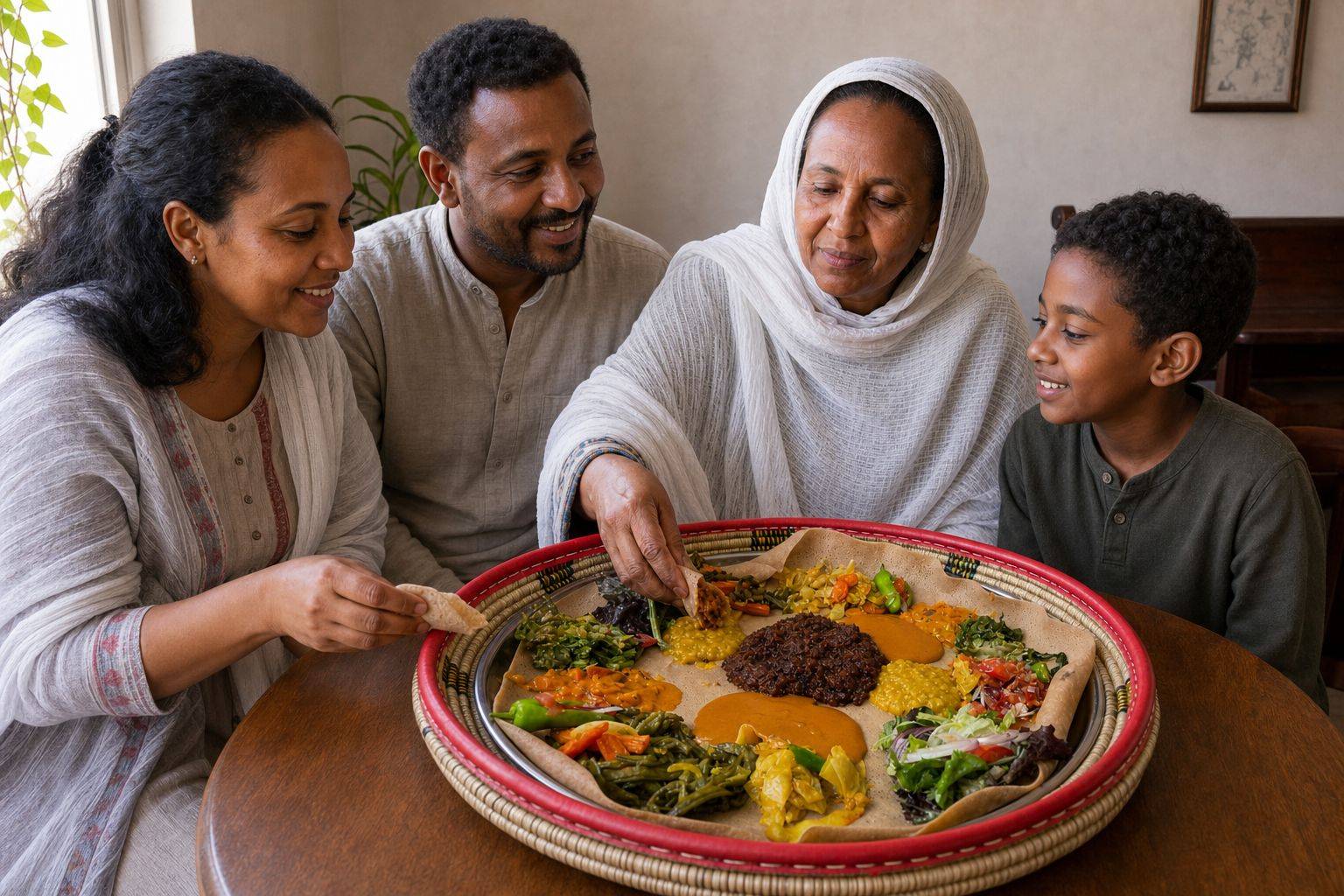
A family-style fasting platter can combine pulses, vegetables, greens, salad, and injera.
A fasting platter can look generous: injera covered with red lentils, yellow split peas, greens, cabbage, potatoes, salad, and shiro. The absence of meat does not make the meal plain. Ethiopian cooks build depth with onion, garlic, ginger, pulses, vegetables, and carefully handled spices.
Food, however, is only one part of an Ethiopian Orthodox fast. The religious practice may also include prayer, restraint, charity, and rules about when a person eats or drinks. Observance varies with age, health, instruction, the fasting period, and pastoral guidance. A visitor can learn the food vocabulary, but should not tell an Orthodox Christian how to keep a fast.
What yetsom means on a menu
The Amharic word commonly written as yetsom identifies fasting food. In normal restaurant use, it signals food prepared without meat, milk, butter, or eggs. That makes many yetsom dishes suitable for a vegan diner, but the two ideas are not identical.
A religious fast has spiritual meaning and may include meal timing. Veganism is a broader practice that avoids animal products for ethical, environmental, health, or other reasons. A vegan visitor still needs to ask about ingredients and shared cooking equipment. An Orthodox diner may also care about preparation according to family or church practice.
English spellings vary. You may see yetsom, ye tsom, or another form, and there is no single official transliteration to point to.
When Orthodox fasting happens
The Ethiopian Orthodox Tewahedo Church observes several fasting seasons as well as many Wednesdays and Fridays. The official church site lists seven major categories, including the Great Lent, the Fast of the Prophets before Christmas, the Fast of Nineveh, the Fast of the Apostles, the Fast of the Assumption, vigil fasts, and weekly fasts.
Published church pages differ on some counts and details. One page describes about two hundred fifty fasting days in total and about one hundred eighty as generally obligatory, while wording about age, exemptions, timing, and the length of certain fasts is not fully consistent across pages. Do not turn those figures into a rule for every person.
Dates for movable fasts change from year to year. As a snapshot from a parish calendar checked on 6 August 2026, the 2026 dates are: the Fast of Nineveh, 2 to 4 February; Great Lent, 16 February to 11 April; Fasika (Easter), 12 April; the Fast of the Apostles, 1 June to 11 July; the Assumption or Filseta Fast, 7 to 21 August; and the Fast of the Prophets, 24 November 2026 to 6 January 2027. Treat this as one year’s snapshot, not a permanent calendar. Recheck the dates every year with the current Ethiopian Orthodox calendar and a priest or informed parish source rather than relying on a fixed date from a previous year.
The heart of a fasting platter
Injera usually forms the base. The stews and vegetables are arranged on top, allowing several people to share. A restaurant may call a mixed plate beyaynetu or yetsom beyaynetu. The number and combination of dishes depend on the kitchen.
The plate often balances several types of food:
- A hot red lentil stew such as misir wot.
- A mild split pea stew such as kik alicha.
- Shiro, a smooth stew made from seasoned chickpea or pulse flour.
- Cooked greens, often called gomen.
- Cabbage, carrot, and potato dishes such as atakilt.
- Green beans and carrots, often prepared as fossolia.
- Tomato, onion, and chilli salad.
- A pulse salad such as azifa.
Names and recipes vary by household and region. Some cooks use more oil, more chilli, or a different pulse. A mixed plate is therefore a sample of one kitchen, not an official fixed arrangement.
Misir wot
Misir wot is a red lentil stew commonly built on slowly cooked onion, oil, garlic, ginger, and berbere. It can be hot, but chilli level differs. The lentils thicken the sauce and make it easy to scoop with injera.
The important fasting detail is the fat. A yetsom version uses vegetable oil rather than niter kibbeh, the seasoned clarified butter used in many nonfasting dishes. At a restaurant, the word yetsom should indicate that distinction, but a diner with strict dietary needs should still ask.
Kik alicha
Kik alicha is usually milder than a red wot. Split peas cook into a soft yellow stew seasoned with turmeric and aromatics. It gives a mixed platter a calm counterpoint to berbere.
Mild does not mean unseasoned, and it does not guarantee the absence of chilli. Kitchens vary. It is a good beginner dish for someone who wants to understand Ethiopian flavour without beginning at the hottest end of the table.
Shiro
Shiro is one of the most practical fasting foods in Ethiopia. Its base is a milled pulse flour, often chickpea or a related blend, combined with spices. The cook turns it into a smooth stew with water, onion, garlic, oil, and seasoning.
Shiro powder is not one universal recipe. Packaged and market blends differ. Some are intended for a hot red shiro, while others are milder. Anyone cooking for a strict vegan or fasting guest should check the ingredient list and use clean utensils.
Greens, vegetables, and salad
Gomen adds dark leafy greens and a slightly earthy note. Atakilt brings soft cabbage, carrot, and potato. Fossolia adds green beans, often with carrots and onion. Fresh tomato salad gives acidity and crunch.
These dishes keep a platter from becoming a row of similar stews. They also show why fasting food should not be described as a substitute for meat. It has its own structure and appeal.
Raw salad needs normal food safety care. Choose a trusted kitchen and use safely washed produce at home. Travelers whose stomachs are sensitive may prefer cooked vegetables.
Ordering respectfully
Ask for yetsom beyaynetu if you want a mixed fasting plate. If your requirement is medical or strictly vegan, ask a second question about butter, stock, egg, and shared pans. Do not assume that a server understands every English dietary term in exactly the same way.
A useful conversation is short and polite:
- Ask whether the dish is yetsom.
- Confirm that it contains no butter, milk, egg, meat, or meat stock.
- Mention an allergy separately and clearly.
- Ask about shared equipment if cross contact matters.
Yetsom describes religious fasting food. It does not mean allergen free. A kitchen may use shared pans, oil, utensils, or surfaces across fasting and nonfasting dishes, and individual fasting dishes may still contain gluten, sesame, peanuts or tree nuts, or soy, depending on the recipe and the spice blend used. If you have a severe allergy and the staff cannot confirm the specific ingredients and how cross contact is controlled, do not treat yetsom as automatically safe. Choose a dish you can verify or eat elsewhere instead.
If you want to say any of this in Amharic, have a fluent speaker check the wording first. A badly translated allergy statement is not useful.
Planning a balanced home plate
For a simple home meal, choose one pulse stew, one cooked vegetable, one fresh element, and injera or another staple. You do not need seven dishes.
For example, serve misir wot with gomen and tomato salad. Another day, make kik alicha with atakilt. Shiro with greens is a practical option when time and ingredients are limited.
Pulses provide protein and iron, while vegetables add fibre and micronutrients. Vitamin C rich foods can help the body absorb plant iron. People who eat fully vegan food for a long period should seek qualified advice about vitamin B twelve and other individual needs. This is general food guidance, not medical advice.
Fasting with health needs
Church sources recognize that fasting practice is not identical for every person, and pastoral guidance matters. A child, pregnant person, traveler, older adult, or person with illness may need different instructions. The official wording on exemptions and ages varies between published pages, so do not present one internet summary as personal religious or medical direction.
Speak with a priest about religious obligations and a qualified health professional about medication, pregnancy, diabetes, eating disorders, or another medical concern. Skipping prescribed medicine to follow a general article would be unsafe.
Hospitality and shared meals
If an Orthodox family invites you to a fasting meal, accept the food with the same respect you would give any home cooking. Ask before taking photographs. Wait for your host to show where to sit and when to begin. Eat from the area in front of you unless the host offers a special bite.
Do not praise the food by saying it is surprisingly good without meat. That frames the meal as a lesser version of something else. Ask about the dish names, ingredients, or family method instead.
Common mistakes
The most common mistake is treating yetsom and vegan as perfect synonyms. They overlap strongly in ingredients, but the meaning and practical concerns differ. Another mistake is focusing only on food and ignoring prayer, timing, and spiritual purpose.
Visitors also assume every Wednesday and Friday works the same way throughout the calendar. Church calendars include exceptions and changing seasons, so it is worth checking the current calendar rather than assuming last year’s pattern still holds. Finally, some people assume a colourful platter must contain every famous fasting dish. A household meal may be just injera and one stew.
A good first plate
Start with a mixed yetsom platter from a trusted kitchen. Identify one red stew, one mild pulse dish, one green vegetable, and one fresh salad. Taste each separately before mixing them. Then return another day for a single bowl of shiro or misir wot.
That approach teaches both variety and depth. More importantly, it keeps the food connected to the people and practice around it. For a broader list of dishes that suit vegan diners throughout the year, continue with our guide to vegan and fasting foods in Ethiopia.