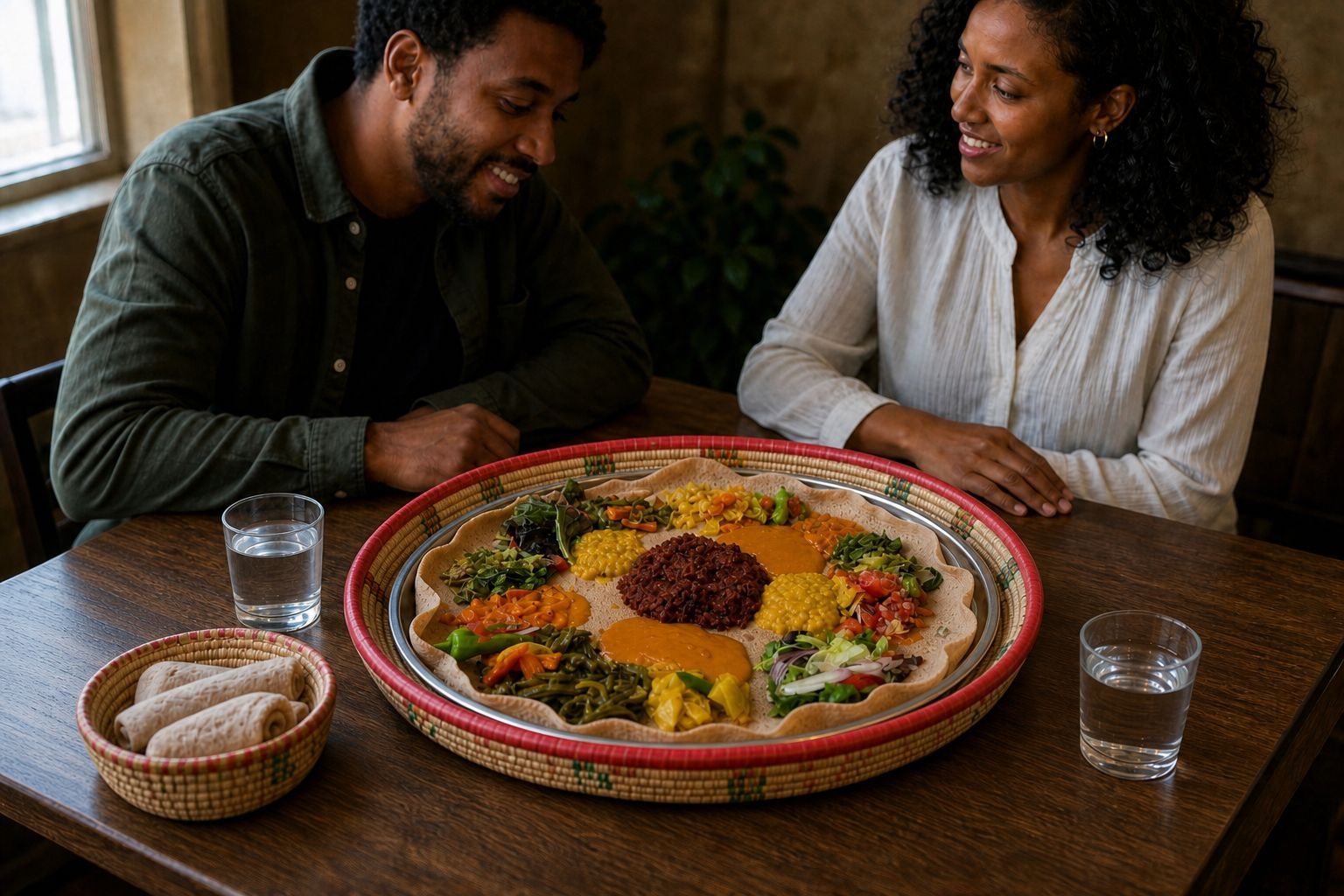
 A shared beyaynetu is an easy way to meet injera and several dishes at once.
If you have never eaten Ethiopian food, the first thing to know before you sit down at a restaurant is that there are usually no plates and no cutlery. The food comes on a large round of soft, tangy flatbread, with different stews and vegetables spooned on top, and you eat with your right hand by tearing off pieces of that same bread. It is social, shared, and a little messy, and once it clicks it is one of the most enjoyable ways to eat anywhere.
This guide walks you through the whole table, from the bread up: what injera actually is, the main stews and dishes, what people eat for breakfast, what to drink beyond coffee, the etiquette that makes a shared platter work, and roughly what it costs.
Injera: the plate you can eat
Injera is the foundation of almost every meal. It is a large, thin, spongy flatbread with a slightly sour taste, made from a fermented batter, traditionally of teff, a tiny local grain. The sourness comes from the fermentation, and it balances the rich, spiced stews on top.
At a meal, injera plays three roles at once: it is your plate, your utensil, and part of the food. Stews and sides are served directly on it, and you tear off pieces from the edge to scoop up each bite. Extra rolled injera usually comes on the side. If you want to try making it yourself, see how to make injera at home, including the fermentation time that gives it the sour taste.
Teff itself is worth knowing a little about, since it is central to the whole cuisine. It is a tiny grain, smaller than a sesame seed, and it grows well at Ethiopia’s high altitude. Injera can come in different shades depending on which teff is used: white or ivory teff makes a pale injera, while red or brown teff makes a darker, slightly earthier one. Both are common, and which one you get is mostly a matter of what a household or restaurant prefers, not a sign of quality.
Wot: the stews at the heart of the meal
The stews are called wot (also spelled wat). They range from mild to fiery, and the deep red, spiced ones get their color and heat from berbere, the signature spice blend. A few you will meet often:
- Doro wot is a rich, spicy chicken stew, usually served with a boiled egg, and often considered the celebration dish.
- Key wot, also called sega wot, is a spiced beef stew.
- Shiro is a smooth, savory stew of ground chickpeas or other legumes, mild and comforting, and a staple for almost everyone.
- Misir wot is spiced red lentils.
- Alicha is a milder style of stew, yellow from turmeric rather than red from berbere, good if you want gentler flavors.
- Yebeg wot is the lamb version of a spiced wot, less common than doro or key wot but worth ordering if you see it.
- Dulet is a chopped mix of tripe, liver, and sometimes lean beef, cooked with butter, chili, and onion. It is more of an acquired dish, often eaten as a snack or with drinks rather than a main meal.
For a longer look at these and more, see the most popular traditional Ethiopian dishes.
Tibs, kitfo, and other favorites that are not stews
Not everything is a stew:
- Tibs is sauteed cubes of meat, sometimes with onion, peppers, and rosemary, ranging from mild to spicy. A very popular order. Zilzil tibs cuts the meat into thin strips, and awaze tibs is tossed in a spiced sauce made from awaze, a paste built on berbere.
- Kitfo is minced raw or lightly warmed beef seasoned with spiced butter and mitmita. Rich and beloved, and often available cooked (leb leb) if you prefer.
- Firfir is shredded injera tossed with sauce and spices, a common breakfast.
- Gomen is collard greens, a frequent side.
If you are cautious about raw meat, say so and order the cooked version. Nobody will mind.
Breakfast: it is not always injera
Breakfast in Ethiopia often looks different from the rest of the day. A few dishes to know:
- Ful is a seasoned fava bean dish, mashed and often mixed with onion, tomato, and a drizzle of oil, eaten with bread rather than injera. It has roots in Middle Eastern and North African cooking and is common in Ethiopia too, especially in cities.
- Chechebsa, sometimes called kita firfir, is torn flatbread fried in a pan and tossed with spiced butter and berbere. It is closer to a savory pancake than injera, and a good option if you want something warm and filling without a full stew.
- Genfo is a thick porridge, usually of barley or wheat, served in a mound with a well of spiced butter melted in the middle. It is hearty and traditional, often eaten on special occasions or cold mornings.
- Firfir, already mentioned above, doubles as a breakfast dish when made without meat, using the previous day’s leftover injera.
None of these require cutlery either. The same approach applies: right hand, tear a piece, scoop it up.
Beyaynetu and fasting food
One dish sums up the whole idea: beyaynetu, a “little of everything” platter with several stews and vegetable sides arranged on injera. It is a perfect first order because you get to taste widely.
Beyaynetu is also usually fasting food (bayenetu in its vegan form). Many Ethiopian Orthodox Christians fast on Wednesdays and Fridays and during longer fasting periods, avoiding animal products, so restaurants serve entirely vegan platters on those days. The Orthodox calendar sets aside a substantial number of fasting days across the year, well beyond just Wednesdays and Fridays, which is part of why vegan cooking is so developed here rather than an afterthought. For vegans and vegetarians this is excellent news: some of the best value, most varied meals here are naturally vegan.
The Orthodox fasting food guide explains the calendar and table in more detail, while the separate guide to vegan and fasting foods in Ethiopia is the practical place to plan an order.
How to eat: the table rules
A few simple customs make the meal comfortable:
- Use your right hand. Tear a piece of injera, use it to pinch up some stew, and eat the whole bite together.
- Eat from your own side of the shared platter rather than reaching across.
- Gursha is a gesture of affection, where someone feeds a bite of food directly to another person by hand. Being offered a gursha is a warm thing, not a test.
- Wash your hands before and after. Many places bring water and soap to the table.
Traditionally, food is served on a mesob, a tall woven basket with a flat top that doubles as a table, with everyone gathered around it rather than seated at a conventional dining table. You will see these in more traditional restaurants especially. You do not need to get any of this perfect. Making an honest attempt is welcomed everywhere.
A quick word on spices and coffee
The flavor backbone is berbere (a red chili and spice blend) and mitmita (a hotter blend), along with niter kibbeh, a spiced clarified butter simmered with herbs and spices that underlies the richness in most wot. Shiro itself is often sold as a powder that is already mixed, a blend of ground legumes and spices you just need to add water and oil to, which is part of why it is such a common everyday meal at home. You do not need to master any of these to enjoy the food, but the beginner guide to Ethiopian spices helps when you want to know what each blend does. A small bag of berbere or shiro powder can also make a useful souvenir if you know its source and plan to cook with it.
And no meal is really finished without coffee, which has its own ceremony and meaning here. It is a whole topic on its own: see Ethiopian coffee culture explained, and if you want to bring some home, the best Ethiopian coffee brands to try is a good place to start.
Drinks beyond coffee
Coffee gets most of the attention, but there are two traditional drinks worth knowing:
- Tej is a honey wine, fermented with honey and flavored with the leaves and twigs of a shrub called gesho, which gives it a slightly bitter edge. It ranges from mild to strong and is often served in a rounded flask called a berele. A tej house (tej bet) is a common place to try it.
- Tella is a traditional beer brewed at home, usually made from barley, maize, or sorghum, again flavored with gesho. It varies a lot from household to household since it is often brewed at home rather than commercially.
Both are worth trying once, especially if you are invited to a home where they are made, though bottled beer and imported wine are also widely available if you would rather stick with something familiar.
Eating at a restaurant versus being invited to a home
Both are common, and the food itself is not that different, but the pace is. A restaurant meal moves at a normal pace and it is fine to eat and go. A meal at someone’s home is a different kind of occasion: expect it to run longer, expect to be offered more than you can finish, and expect a genuine effort was made regardless of how casual the invitation sounded. Bringing something small, like fruit or pastries, is a thoughtful gesture, though it is not strictly required. If you are ever unsure whether an invitation to eat is a big deal or a casual one, treat it as the former. It rarely hurts to show up a little more prepared than the occasion turns out to need.
What to try first
If it is your first time, this is a safe, rewarding path:
- Start with beyaynetu to taste many things at once.
- Add shiro if it is not already on the platter. It is mild and easy to love.
- Try tibs for a meat dish that is approachable.
- Work up to doro wot and, if you are adventurous, kitfo.
- If you are around in the morning, try chechebsa or genfo once, even if you usually skip breakfast. They are different enough from the rest of the menu to be worth the detour.
Order mild first, then chase the heat once you know what you like. If you eat meat, note that a genuinely large share of the menu at most restaurants is vegan by default on fasting days, not a special “vegetarian option” tucked away at the bottom, so you rarely need to ask for something separate.
What a meal actually costs
Eating out is genuinely affordable here, especially compared to cuisines elsewhere that lean heavily on cooking everything from scratch at home. As a rough starting point, a meal cooked at home runs from about 200 to 300 birr, a fasting food meal bought out starts from about 400 birr, and a regular meal bought out starts from about 625 birr. These are the same figures used in the cost of living breakdown, which goes deeper on how food fits into a monthly budget if that is useful to you.
Common beginner mistakes
- Eating with your left hand, or reaching across the shared platter.
- Assuming everything is fiery. Plenty is mild, and alicha dishes have no berbere heat.
- Skipping the vegan platters because they are “fasting food.” They are some of the best food on the menu.
- Filling up before the coffee. Leave room.
- Being shy about asking. Staff are used to guiding first timers.
- Expecting dessert. Sweets are not a big feature of a traditional meal here; fruit is the more common way to finish, if anything.
- Ordering a full stew alone for breakfast. Save doro wot and kitfo for later in the day, and try chechebsa or ful instead in the morning.
Bottom line
Ethiopian food rewards curiosity more than expertise. Sit down, order a beyaynetu, eat with your hand from the shared injera, and try one new stew each visit. Within a few meals you will have your own favorites and the whole table will feel natural. Branch out into breakfast dishes once you are comfortable with the basics, and do not skip a chance to try tej or tella if you get invited somewhere that serves it. Start with what is in this guide, and let the rest of these food guides take you deeper into any one part of the table that catches your interest.