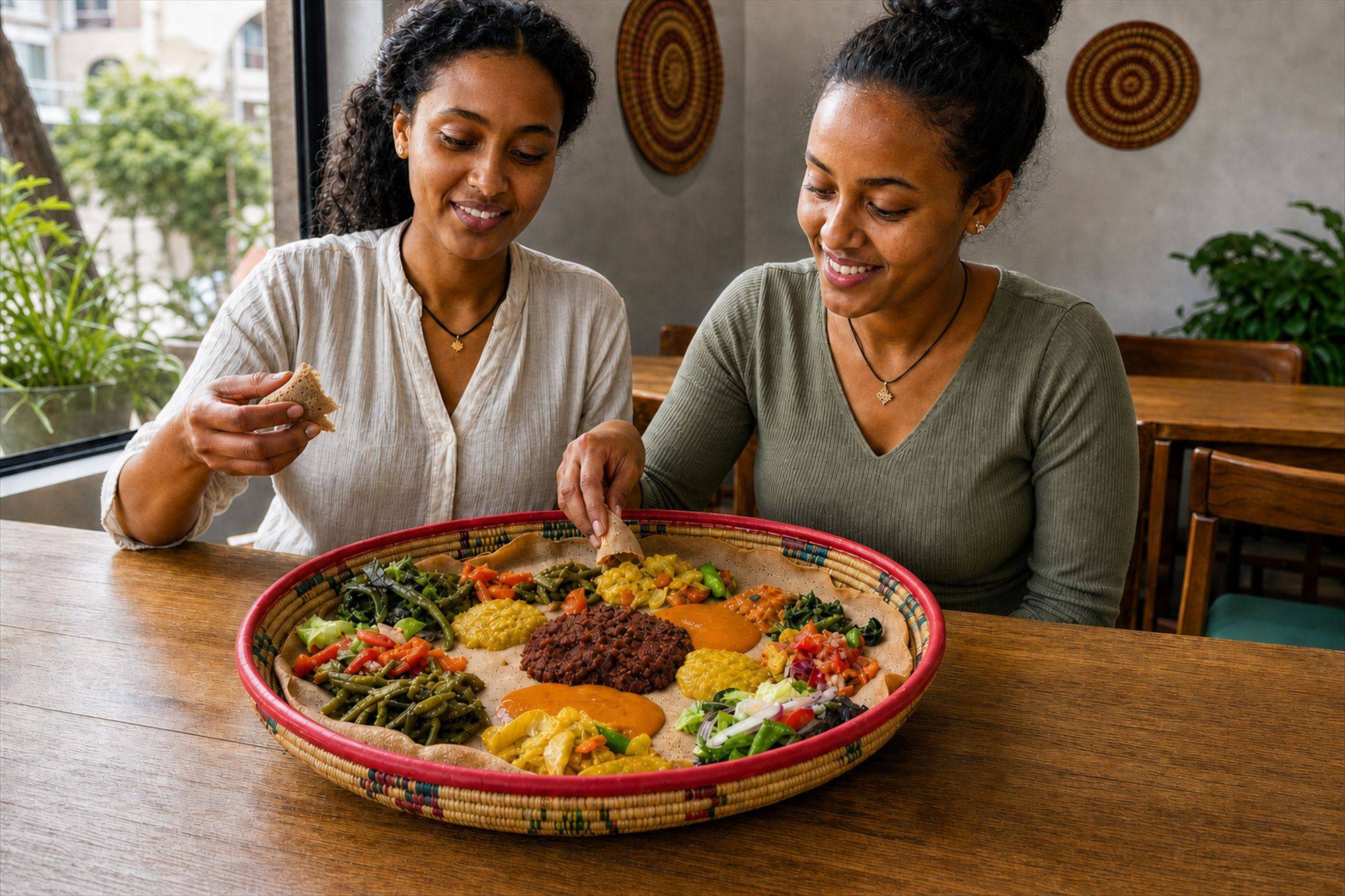
Everyday yetsom dishes offer a familiar plant-based meal built around injera, pulses, greens, and vegetables.
Ethiopia is unusually welcoming to someone looking for food without meat, dairy, or eggs. Orthodox fasting practice has created a large, familiar menu of pulse stews, vegetables, salads, and injera. You can often eat a full shared meal without asking a kitchen to invent a replacement dish.
That convenience still needs a little knowledge. A dish can change from fasting to nonfasting depending on the fat, stock, garnish, or cooking vessel. The word yetsom is your best starting point, not a final guarantee for every allergy or strict vegan requirement.
Readers new to the wider table can first use our beginner guide to Ethiopian food.
Fasting food and vegan food overlap
Yetsom food is generally prepared without meat, milk, butter, and eggs for Ethiopian Orthodox fasting. Vegan food also avoids those ingredients, but the reasons and daily practice are different. Religious fasting may involve prayer and meal timing. Vegan diners may be concerned about honey, shared equipment, or ingredients outside the usual fasting rules.
In practice, a restaurant’s yetsom menu gives a vegan visitor a strong set of options. Ask a follow up question if cross contact, allergy, honey, or packaged ingredients matter to you.
Injera
Traditional injera is made from flour, water, and fermentation, with teff central to its identity. Restaurant and household formulas can include other grains. The basic bread is normally vegan, but preparation surfaces and accompaniments vary.
Injera does more than replace a fork. Its sour flavour balances rich stews, and its porous surface catches sauce. Tear a manageable piece with your right hand, fold it around a small portion, and eat without squeezing sauce across the shared plate.
Anyone with a gluten related medical need should ask what flours were used and discuss safe choices with a health professional. Do not assume every injera is made from pure teff.
Shiro
Shiro is a smooth, comforting stew made from milled pulse flour and seasonings. It can be a simple everyday meal or part of a larger spread. A fasting shiro uses oil. A nonfasting version may use seasoned butter, so ask for yetsom shiro.
The powder blend differs between sellers. If you cook at home, read the package, smell it before use, and store it dry. Begin with a small amount because chilli and salt levels vary.
Misir wot
Misir wot brings red lentils together with onion, garlic, ginger, oil, and berbere. It is one of the richest plant based dishes on a mixed platter. The lentils should be soft enough to hold sauce without becoming watery.
Heat varies by kitchen. If you are new to berbere, eat a little misir with a larger piece of injera and a mild vegetable. Water alone does not remove chilli heat, while the rest of the plate can soften the experience.
Kik alicha
Kik alicha is a mild yellow split pea stew, often seasoned with turmeric and aromatics. It offers a useful contrast to red lentils or spicy shiro. Many beginners find it easy to enjoy, but mild is not the same as bland.
Ask whether it is the fasting version. Home cooks sometimes adapt recipes with butter, and restaurant preparation can change outside a fasting season.
Gomen
Gomen is a cooked greens dish. The exact leaf, seasoning, and texture vary. Some versions are soft and deeply cooked, while others retain more bite. Garlic, onion, chilli, and oil may appear.
Greens are especially useful on a plate dominated by pulses and starch. Their slight bitterness and savoury flavour reset the palate between richer bites.
Atakilt and fossolia
Atakilt commonly combines cabbage, carrot, and potato with turmeric and aromatics. Fossolia often pairs green beans and carrots with onion and tomato. Both dishes can be gently seasoned and work well for diners who want less chilli.
Recipes are not fixed. Some kitchens add more oil or cook vegetables until very soft. Ask for yetsom preparation if the menu does not separate fasting dishes.
Azifa and other pulse salads
Azifa is a lentil salad often sharpened with lemon, mustard, onion, and green chilli. It adds acidity and texture to a platter. Ingredient balance varies, so someone with a mustard allergy must ask directly.
Other cold pulse or vegetable dishes may be available by region or season. Confirm names locally instead of assuming every restaurant uses the same vocabulary.
Tomato salad
A simple tomato, onion, green chilli, and lemon salad can brighten a shared meal. Some versions include additional ingredients or dressing. Raw produce requires careful washing, especially for travelers.
If food safety is a concern, choose a trusted busy kitchen or focus on cooked vegetables. That is a practical choice, not a judgment on Ethiopian salad.
Potatoes, bread, and breakfast foods
Potato stew can be vegan when cooked with oil and vegetable seasonings. Ful, made from fava beans, is another filling option in many Ethiopian cities, but toppings can include egg, butter, or dairy. Ask for those to be left out and confirm the base preparation.
Several breakfast favourites require more caution. Chechebsa or kita firfir may be mixed with butter. Genfo is often served with seasoned butter. Bread can contain milk, egg, or improvers depending on the bakery. Ask rather than relying on appearance.
Roasted chickpeas, plain popcorn, roasted barley, fruit, and simple bread may work as snacks, but packaged flavourings need an ingredient check. At cafés and bakeries, lentil or vegetable sambusas and vegetable spring rolls may also be yetsom options. Confirm the filling, wrapper, frying oil, and shared fryer before treating them as strictly vegan.
How to order a mixed plate
Ask for yetsom beyaynetu when you want variety. Before ordering, tell the server if you need food with no butter, milk, egg, meat, or meat stock. Explain allergies separately. A general preference and a severe allergy are not the same request.
Check four points:
- Is every item on the platter yetsom today?
- Is the shiro or stew prepared with vegetable oil?
- Are any toppings added after cooking?
- Is shared equipment a problem for your needs?
If you want Amharic or Afaan Oromo phrases for this conversation, get them from a fluent speaker rather than a direct machine translation, which can turn a simple question into something confusing or wrong.
Build an easy meal at home
A good plate needs contrast, not a large dish count. Use one pulse, one cooked vegetable, something fresh or acidic, and injera or another staple.
Try these combinations:
- Shiro, gomen, and tomato salad.
- Misir wot, atakilt, and injera.
- Kik alicha, fossolia, and azifa.
- Potato stew, greens, and a small lentil salad.
Cook onion patiently before adding liquid. Bloom spices gently without burning them. Use separate tasting spoons and add salt near the end when a spice blend already contains salt.
A small beginner pantry
Keep red lentils, split peas, chickpea or shiro flour, onion, garlic, ginger, turmeric, a trusted berbere blend, neutral cooking oil, and a dry staple. Add greens and seasonal vegetables as available.
Do not buy every Ethiopian spice at once. Berbere varies in heat, so begin with a small packet from a seller who can explain the blend. Store spices away from heat, moisture, and direct light. Our beginner guide to Ethiopian spices explains the pantry in more detail.
Nutrition without exaggerated claims
Pulses can provide protein, fibre, and iron. Injera and other staples supply energy. Greens and vegetables widen the range of nutrients. Pairing plant iron sources with vitamin C rich food can support absorption.
A fully vegan diet needs planning over time. Vitamin B twelve normally requires a reliable fortified food or supplement. Individual needs differ, especially during pregnancy, childhood, illness, or intensive sport. Ask a qualified health professional rather than using a restaurant guide as a medical plan.
Avoid claims that one spice or dish cures disease. Ethiopian food can be nourishing and enjoyable without turning culture into a health marketing slogan.
Common mistakes
The first mistake is ordering any vegetable dish without asking how it was cooked. The second is assuming fasting food is always mild. Berbere and green chilli can make a plant based meal very hot. The third is confusing injera made with mixed flour with pure teff injera.
Another mistake is treating one mixed platter as a complete map of Ethiopian vegan food. Regional dishes, household recipes, and seasonal ingredients extend far beyond a standard restaurant beyaynetu.
The easiest first order
Order a yetsom mixed plate at a trusted Ethiopian restaurant. Ask the server to name each item. Taste the mild dishes first, then the red stews, and finish by mixing small amounts. On your next visit, order one favourite by itself so you can understand its texture and spice more clearly.
The practical advantage of Ethiopian fasting food is choice. You are not limited to a plain side salad or a removed ingredient. With two careful questions, you can eat a meal that was designed to be complete from the beginning.