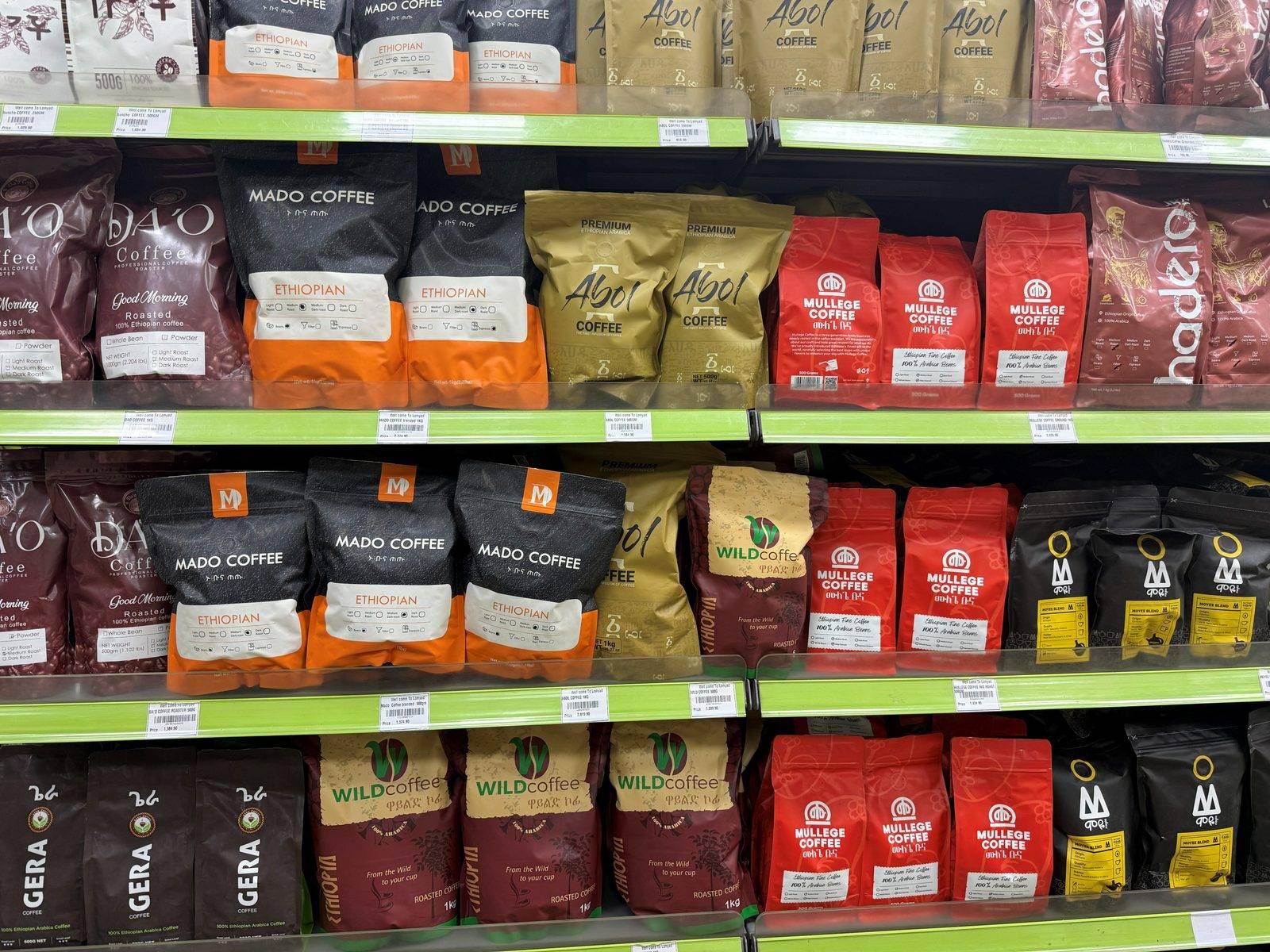
 Mado, Abol, Mullege, Wild: the shelf is a map of Ethiopian coffee.
Ethiopian coffee is not one flavor. The country grows an unusually wide range of beans, and the biggest clue to what you are getting is the region printed on the bag. Learn a handful of those names and you can choose good coffee anywhere, here or abroad. If you want the fuller picture first, including the ceremony these beans are usually brewed for, see Ethiopian coffee culture explained.
Start with the regions
A bag labelled with just one of these regions is what “single origin” means in practice: the beans come from one growing area rather than a blend of several. These are the regions you will see most, and each has a general reputation, though taste is personal, so treat these as a starting point rather than a guarantee:
- Yirgacheffe is often known for bright, floral cups that taste almost like tea, with citrus and jasmine notes. A common favorite for people who like lighter, aromatic coffee.
- Sidamo, also spelled Sidama, is a broad region that is generally well regarded, frequently balanced with berry and citrus character.
- Harar, also spelled Harrar, is a dry processed eastern coffee often described as similar to wine, or fruity, with a bold, distinctive character.
- Guji is increasingly celebrated, often vibrant with fruit forward flavor.
- Limu and Jimma are other regions you will encounter, each with their own profile.
If you are buying for someone else, a small bag with a clear region, roast, process, and roast date is a better choice than a large anonymous bag. It gives the person useful information even if their taste is different from yours.
Washed or natural
You will also see washed and natural (dry processed) on bags. As a rough guide, washed coffees tend to taste cleaner and brighter, while naturals tend to be fruitier and heavier. Neither is better; it is preference. Trying one of each from the same region is a good way to learn what you like.
Whole bean or ground
Buy whole bean if you have a grinder, since coffee is freshest ground just before brewing. Buy ground only if you will use it quickly. Check for a roast date on the bag where you can. If you would rather have someone else make it, good cafes to sit and drink it out are not hard to find either.
Supermarket brands you may see in Addis
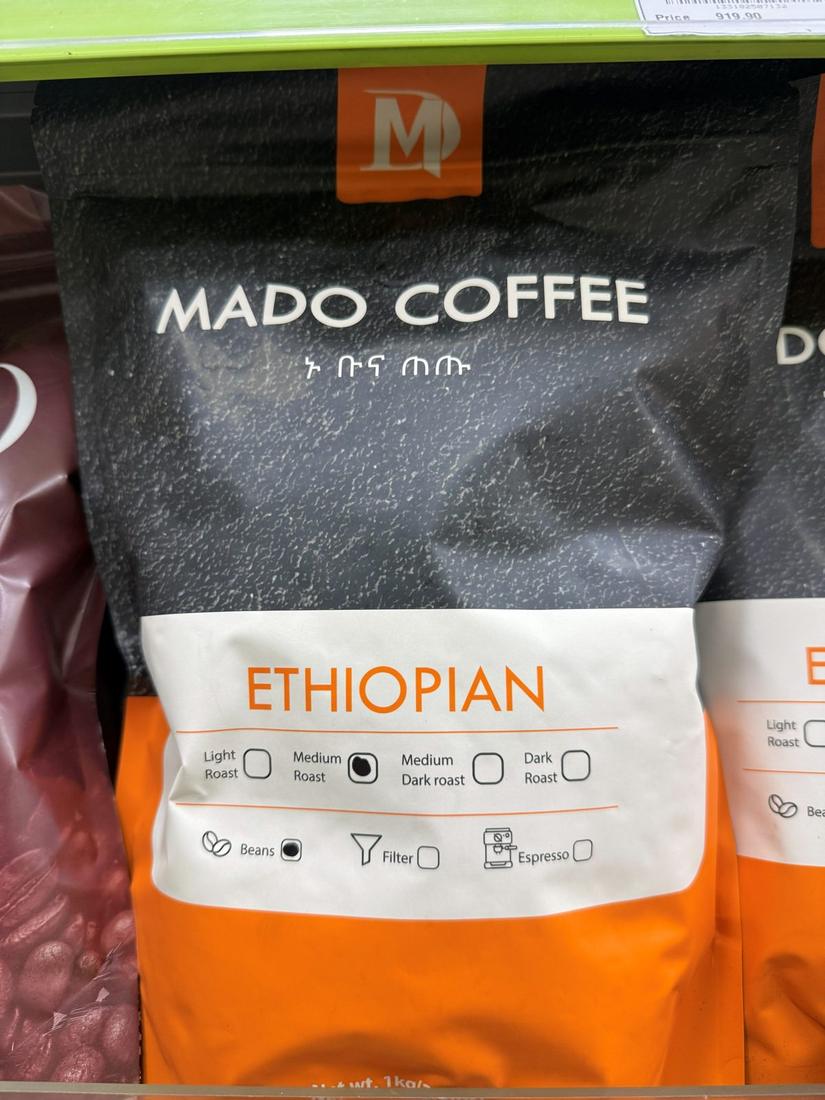 The label tells you the story: origin, roast, beans or ground.
A single supermarket shelf in Addis Ababa can carry several of these side by side, each bag marked “Ethiopian” with roast and grind options printed on it, the kind of everyday detail that becomes familiar once you are settled into life here:
- Mado Coffee is sold as both whole bean and ground, with light, medium, medium dark, and dark roast marked on the bag. A 1kg bag ran about 920 birr on one Addis supermarket shelf in July 2026; check the current tag, since prices move.
- Abol Coffee is sold as “premium Ethiopian arabica,” usually in 500g bags.
- Mullege Coffee is labelled “Ethiopian fine coffee, 100% arabica beans,” in 500g and 1kg sizes.
- Wild Coffee is branded “from the wild to your cup,” 100% arabica, sold in 1kg bags.
- Gera Coffee is a plain “100% Ethiopia arabica” bag, no extra branding.
- A package labelled DA’O Coffee was also on the photographed shelf, but I could not confirm its Ethiopian producer through a reliable current source. I would not recommend it by name until the company details on the back of the bag are checked.
The five confirmed names are not personal taste winners. They are real products seen on an Addis shelf. Current company information also supports Mado, Mullege, Wild, Gera, and Abol as operating coffee businesses, although some package sizes still come only from the photographed bags. Treat the list as a starting point rather than a ranking.
Ethiopian roasters with direct buying options
Supermarket stock is convenient, but a roaster’s own shop is usually the easier place to ask when the coffee was roasted, whether it is washed or natural, and which grind suits your equipment. These businesses currently provide enough public information to plan a purchase.
Tomoca
Tomoca sells packaged Ethiopian beans through its coffee houses. The Ministry of Tourism’s 2026 Addis Ababa brochure lists branches in Piassa, Arat Kilo, and Bole. Piassa is the familiar choice for someone who wants the old coffee house experience as well as a bag to take home. Tomoca publishes several roast choices, but its locations appear across more than one web domain and published hours do not always agree. Check the chosen branch before travelling across town.
Garden of Coffee
Garden of Coffee lists cafe roasteries at Sar Bet, Tele Bole, Kazanchis, and Entoto Park. Its retail setup is especially useful for a first purchase because customers can choose a coffee and roast level, and the company says the bag carries the roast date and the roaster’s name. Its range includes Yirgacheffe, Harrar, Sidamo, Wollega, and Jimma. Prices shown by its international online shop are in US dollars, so do not assume those are the Addis walk in prices.
Tarara Coffee
Tarara publishes washed and natural coffees, several roast profiles, and packages of 250 g, 500 g, and 1 kg. Its official contact page gives a purchase location on Jackros Street beside the Meta Brewery office. This is a practical stop if you want to compare processing and roast without depending on whatever a supermarket happens to have that day. Confirm current stock before making a special trip.
Hadero
Hadero lists a house blend as well as Yirgacheffe, Sidama, Limmu, Jimma, and Harar coffees. Its public location is on Jackros and Salite Mehret Road. The site does not show a dependable live stock or price list, so use it to choose the kind of coffee you want, then contact the shop for availability.
Galani
Galani Coffee lists branches at Jackross, Lebu, Churchill, Entoto Park, and Seba Dereja. It also links directly to local ordering through Deliver Addis, where the current catalogue includes a house blend and Turkish style ground coffee. The displayed price can change when a size is selected, so check the final basket rather than treating one number as the price for every bag.
Moyee Coffee Ethiopia
Moyee Coffee Ethiopia’s current company page lists locations at Bole Medhanialem, Atlas, Bisrate Gabriel, and Friendship Park, and recent posts say customers can buy bags to take home. Its Ethiopian operation describes Limu and Jimma Arabica among the coffees it uses. Check the Ethiopian company page rather than an overseas Moyee store when you need a local branch or price.
Sabae Coffee
Sabae makes the choice unusually clear. Its current range identifies Motivate as a dark espresso roast, Empower as a washed single origin medium roast, and Inspire as a natural single origin light roast. The products come in several sizes, and the company links to Deliver Addis for local orders. Flavor and sourcing statements on the brand site are company claims, so choose by the concrete facts on the bag first.
Green Gold
Green Gold lets local buyers choose beans or powder, package size, and light, medium, or dark roast through its Addis shop. The company also lists cafes at locations including Skylight, Entoto Park, Andinet Park, and Bambis. Its interactive checkout did not expose a stable price during this review, so the article does not quote one.
Where to buy without wasting a trip
For freshness and advice, start with a cafe roastery that sells its own bags. You can look at the roast date, ask how the coffee was processed, and request the correct grind. Tomoca, Garden of Coffee, Tarara, Hadero, Galani, Moyee, Wild Coffee, and Green Gold all have evidence of direct local sales.
For delivery within Addis, Galani and Sabae are the clearest verified options because each brand points customers to Deliver Addis. Green Gold also advertises local ordering. Availability can change between opening the page and checking out.
Supermarkets are useful for comparing several everyday brands in one place. Gera’s producer says its coffee is sold through Ethiopian supermarkets, while Mado, Abol, Mullege, Wild, and Gera were all present in the author’s July 2026 shelf photo. No reliable live inventory identifies which chain has which bag today, so do not travel to a particular branch based only on this article.
Do not leave coffee shopping until the airport unless convenience matters more than choice. Duty free shops exist at Bole International Airport, but I did not find an authoritative current inventory showing which Ethiopian coffee brands or sizes they carry.
If you are ordering from another country, use the roaster’s official international shop or an authorized seller and compare the roast date, shipping time, and final delivery cost. A famous origin name does not help much if the bag spends months in transit.
How to choose, quickly
- Pick a region based on the general profile you want.
- Choose washed for a usually cleaner cup or natural for a usually fruitier one.
- Match the roast level to how you brew and what you enjoy.
- Buy whole bean if you own a grinder, and look for a recent roast date.
- Start with a small bag, record what you liked, then buy more.
Common mistakes
- Ignoring the region on the bag, which is the biggest clue to flavor.
- Buying coffee that is already ground and letting it go stale.
- Assuming pricier means better for your taste; the region and freshness matter more.
- Grinding a whole week’s worth at once.
Bottom line
The word “Ethiopian” on the front is only the beginning. A useful bag tells you the region, processing method, roast, format, and preferably the roast date. Compare those details across a supermarket brand and one or two cafe roasters, then let your own cup decide what deserves a second purchase. Coffee also follows many Ethiopian meals naturally, so the beginner’s guide to Ethiopian food is a useful next read.