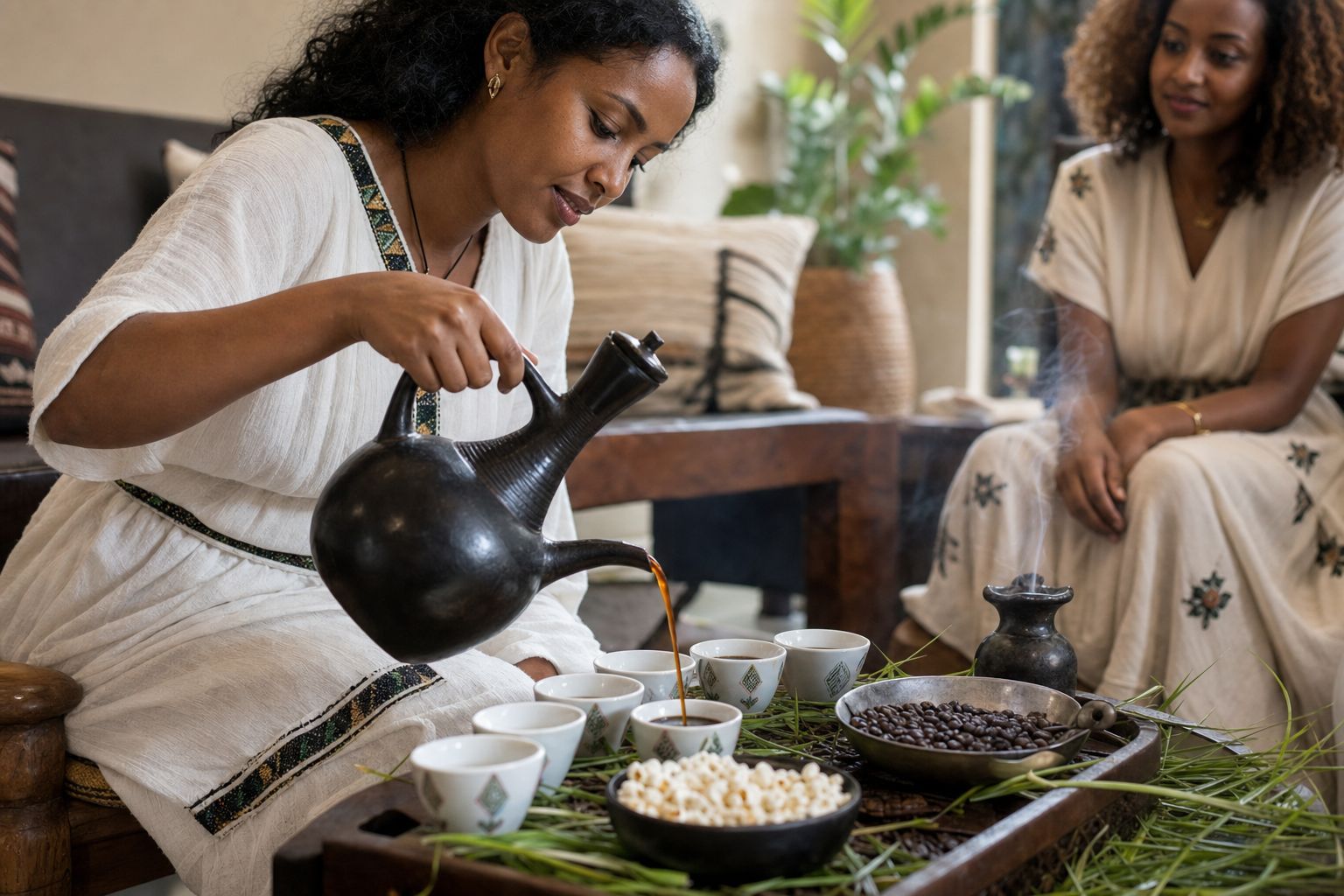
 The careful pour is only one part of the time shared around a coffee ceremony.
Ethiopia is where coffee comes from, and that is not a marketing line. The plant and the drink trace back here, and coffee is woven into daily and social life in a way that goes far beyond a morning cup, something you will notice within your first week of living in Addis Ababa. The clearest expression of that is the coffee ceremony, a slow, deliberate ritual of roasting, brewing, and serving that can take the better part of an hour. If you spend any real time here, you will be invited to one.
The most told origin story involves a goat herder named Kaldi, who is said to have noticed his goats getting unusually energetic after eating berries from a certain bush, and tried them himself. It is a legend, not a documented history, and different tellings vary in the details, but it is worth knowing because Ethiopians themselves tell it often, and it is part of how the country understands its own relationship with coffee.
More than a drink
Coffee, buna, is how people gather. A ceremony marks hospitality, friendship, and important moments, and being invited is a genuine welcome. It is unhurried on purpose. The point is not caffeine, it is the time spent together while it is prepared. It usually follows a meal too, so if you are new to the food that comes before it, the beginner’s guide to Ethiopian food is worth reading alongside this.
The ceremony, step by step
The details vary by household and region, but the shape is consistent:
- Green beans are washed and roasted in a pan over heat, right there in front of you, until they darken and release their aroma. The host often carries the smoking pan around so guests can take in the smell.
- The roasted beans are ground, traditionally by hand.
- The coffee is brewed in a jebena, the distinctive clay pot with a round base and a long neck, and brought to a boil.
- It is poured in a thin, practiced stream from a height into small handleless cups, often set close together on a tray.
- Incense is usually burning throughout, and there may be a snack, commonly popcorn, roasted grains, or bread, to go with the coffee.
The three rounds
A full ceremony traditionally has three rounds, each with its own name. The first, abol, is the strongest and marks the start, a moment of connection and respect. The second, tona, is a little weaker and stands for continuing the bond. The third, baraka, is the lightest and means “blessing,” the peace and goodwill that the shared coffee leaves behind. Staying through the rounds is part of the courtesy. Leaving after the first cup can seem abrupt, so if you have time, sit through at least a couple.
The same beans are typically used across all three rounds, with water added and reboiled each time, which is why the coffee gets progressively lighter from abol to baraka rather than a fresh pot being made for each round. That gradual fading is part of the symbolism: the strongest connection comes first, and what is left by the third round is the gentler, lingering goodwill.
Who hosts, and where it happens
The ceremony is traditionally performed by a woman of the household, often seated on a low stool near the roasting pan while guests sit around her on chairs or cushions. A dedicated corner of a home, sometimes with fresh grass or flowers scattered on the floor, may be set aside for it. In many workplaces and neighborhoods, an informal daily ceremony brings colleagues or neighbors together in the same way it would at home, so it is not only a special occasion custom, it can be a genuine daily habit.
How to be a good guest
- Accept the invitation if you can. It is a warm gesture.
- Take the cup with your right hand, and do not rush.
- Stay for more than one round when time allows.
- Compliment the coffee and the host. It is appreciated.
- If you do not drink coffee, say so kindly; there is usually no pressure, and the company is the real point.
Coffee in daily life
Beyond the formal ceremony, coffee is everywhere: quick macchiatos at tiny cafes, a pot shared with neighbors, a break that structures the afternoon. Some of those cafes double as good places to sit and work for hours, not just grab a quick cup. The country also grows some of the world’s most celebrated beans, from regions whose names coffee lovers abroad will recognize. If you want to take some home, a few real brands to look for are worth knowing.
Modern cafe culture and the traditional ceremony sit side by side rather than one replacing the other. A quick espresso based drink on the way to work is completely normal, and so is a full ceremony at home in the evening. Neither one is treated as more authentic than the other, they simply serve different moments in the day.
Incense, snacks, and the small details that add up
Incense is not just decoration. Burning it during the ceremony is meant to purify the space and add to the sensory experience alongside the smell of roasting beans, and its smoke is part of what makes the ritual feel distinct from just making a cup of coffee. The snack that comes with it, most often popcorn, but sometimes roasted barley, peanuts, or bread, is there to balance the strength of the coffee rather than to serve as a full meal on its own. None of these details are strictly required to enjoy the coffee, but together they are what turn a drink into an occasion.
Common mistakes
- Treating it as a quick drink and leaving after one cup.
- Using your left hand to take the cup.
- Turning down an invitation without warmth. A polite decline is fine; a dismissive one is not.
- Expecting it to be fast. The slowness is the point.
- Checking your phone through the ceremony. It reads as disengaged from something the host is doing specifically for you.
- Assuming a modern cafe visit and a home ceremony are interchangeable. They are related but not the same experience.
Bottom line
The coffee ceremony is the clearest window into how people here value time and company. Roasting, grinding, brewing in the jebena, and three unhurried rounds, all of it says: stay a while. Accept the next invitation you get, take the cup with your right hand, sit through the rounds, and put the phone away while you do. It is one of the warmest experiences the country offers, and it rewards patience more than almost anything else you will encounter here.