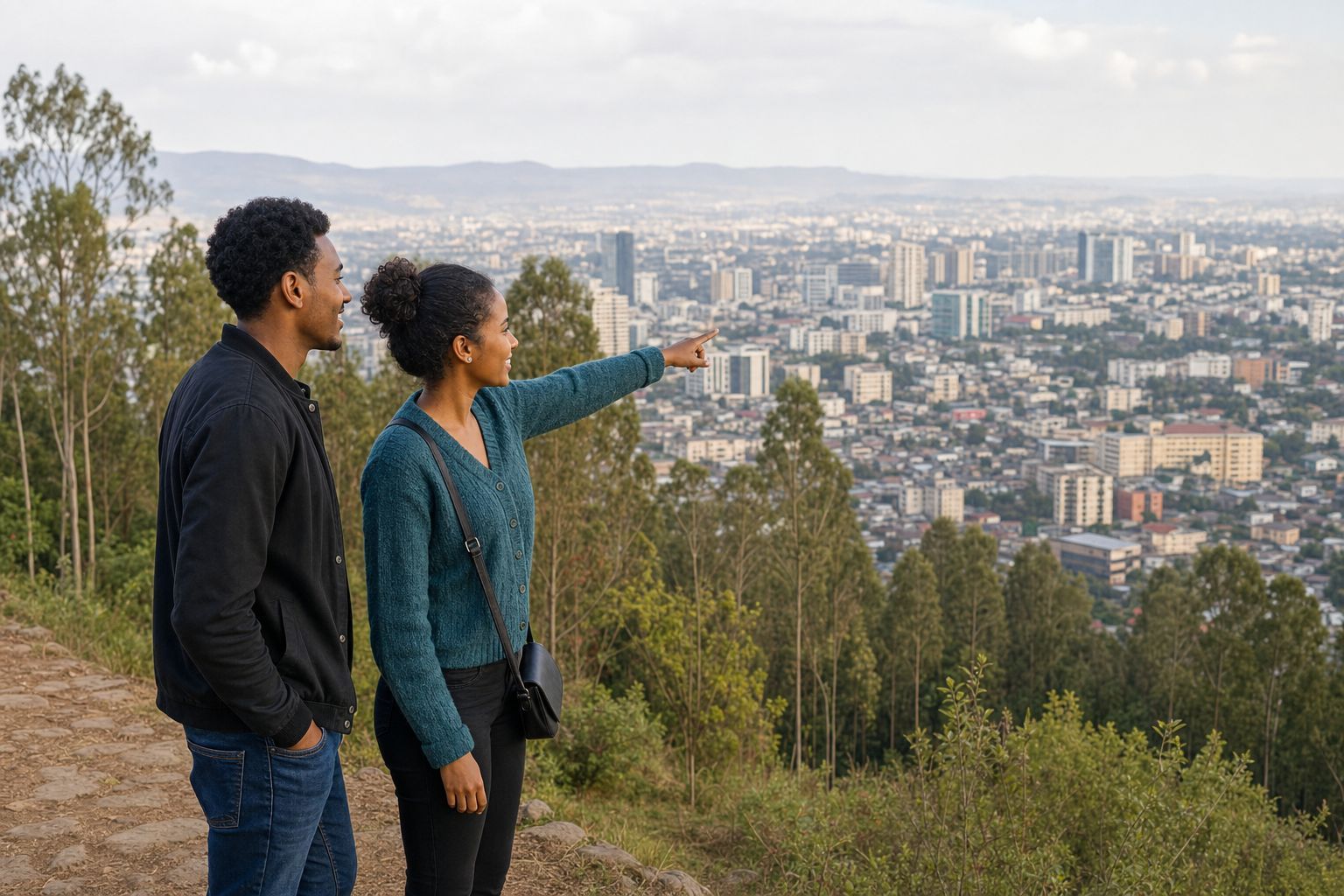
 A view from Entoto gives the city’s scale before the day of exploring begins.
Addis packs more into a short drive than most visitors expect. In a single day you can stand next to one of the most famous fossils ever found, climb to a church on a mountain ridge with the whole city below you, and get lost in a market the size of a small town. If you are researching things to do here before a trip, these are the attractions that are actually worth your limited time, not a copied list of every entry on a tourism map. The trick is not seeing everything. It is choosing a few places that fit together and giving them enough time.
Here is where I send friends who are visiting, grouped so you can build a sensible day rather than zigzag across the city in traffic. If you are only just settling in, the beginner’s guide to living in Addis Ababa is worth reading first.
Start with the museums
The National Museum of Ethiopia is the one most people come for. It is home to Lucy, the famous early human fossil known here as Dinkinesh, “you are marvellous” in Amharic. The bones on display are usually a careful replica while the original is kept protected, so do not be surprised by that. Beyond Lucy, the museum runs from ancient history up through royal artefacts, and it gives you useful background before you see the rest of the city. Give it an hour or two.
The Ethnological Museum is a different experience and, for many people, the more memorable one. It sits inside Addis Ababa University, in a building that was once Emperor Haile Selassie’s palace. The collection walks through the cultures and daily life of Ethiopia’s many peoples, and you can still see parts of the old palace, including the emperor’s private rooms. It is calm, green, and rarely crowded.
If you only have time for one, pick based on your interest: the National Museum for deep history and Lucy, the Ethnological Museum for culture and a quieter, more personal feel.
History and faith
Holy Trinity Cathedral (Kidist Selassie) is one of the most important churches in the country and the burial place of Emperor Haile Selassie and Empress Menen. The building itself is striking, and the grounds hold the graves of notable Ethiopians. Dress modestly, cover your shoulders, and be ready to remove your shoes before entering the prayer areas.
Near the old Piassa district, St. George’s Cathedral is another landmark worth a stop. Its octagonal shape and long history make it a good pairing with a walk through Piassa, the oldest part of the modern city.
A note on timing: churches are busiest and most atmospheric during major religious holidays, but they are also more crowded and less suited to a relaxed visit then. On a normal weekday you will have space to look around.
Views from Entoto
For the best view of how big Addis really is, go up. Entoto is the mountain ridge on the northern edge of the city, and from the top you look out over the whole capital. This is where Emperor Menelik II first settled before the city moved down to its current site, so there is real history here alongside the view, including the old Entoto Maryam Church and a small museum. The redeveloped Entoto Park has walking and cycling paths and places to eat. Mornings tend to be clearer, so go early if you can, and bring a layer because it is noticeably cooler up there.
Green space in the city
Addis has added large public parks in recent years, and they are genuinely pleasant.
Friendship Park (part of the Sheger Park project) runs along the river in the center of the city, with landscaped paths, fountains, and open space. It is a good, easy stop, especially in the late afternoon.
Unity Park is built into the grounds of the National Palace and mixes gardens and pavilions with restored historical buildings and some animals. It is more of a planned visit than a quick stroll, and entry may need to be arranged in advance, so check the current requirement before you go.
Markets worth your time
Merkato is often described as one of the largest open air markets in Africa, and walking through it is an experience in itself. You can find almost anything here. It is also busy and easy to get overwhelmed in, and it is the kind of place where you keep your phone and wallet secure and your attention up. Going with someone who knows it, or a licensed guide, makes a big difference for a first visit.
For something more specific, Shiro Meda is the place to look at traditional clothing, especially the white cotton dresses and shawls worn on holidays. Even if you are not buying, it is a good window into everyday craft. If you do buy, expect to bargain politely.
The civic heart
Meskel Square is the large open plaza at the center of the city. On an ordinary day it is a wide public space where people exercise on the steps. During the Meskel festival it fills with a huge crowd for the Demera bonfire. Even passing through gives you a sense of the city’s scale.
From there, a walk through Piassa ties the old and new city together, with historic shopfronts, cafes, and churches within a short distance.
Practical tips for visiting
A few things that make these visits smoother:
- Group by area and time of day. Museums and Piassa sit relatively central. Entoto is a trip up and out, so give it its own half day, ideally a clear morning. For fares and how to actually get between these places, see the public transport guide.
- Dress for churches. Modest clothing, covered shoulders, and shoes that are easy to slip off.
- Ask before photographing inside museums and churches. Some allow it, some charge a small camera fee, and some do not allow it at all.
- Consider a licensed guide for Merkato and Entoto. It adds context and, in the market, peace of mind.
- Mind the traffic. Late afternoon slows everything down, so plan longer trips like Entoto earlier in the day.
- Carry some cash. Entry fees, guides, and market purchases are usually cash, and card acceptance is limited.
Common mistakes
- Trying to cram Entoto and a full museum day into the same afternoon. You will spend it in traffic.
- Showing up to a church in shorts and getting turned away from the prayer area.
- Bringing valuables loose into Merkato.
- Assuming everything takes cards. It does not.
- Going to Unity Park without checking whether you need to arrange entry first.
A simple one day plan
If you have a single day, this order works well: start at the National Museum in the morning, walk over to the Ethnological Museum and the university grounds, break for lunch and coffee around Piassa with a look at St. George’s Cathedral, then finish with the late afternoon light at Friendship Park or, if you started early enough, head up to Entoto for the view. Save Merkato for a separate morning when you are fresh.
Addis rewards a slower pace. Pick three or four of these, leave room for a coffee somewhere in between (worth reading up on Ethiopian coffee culture before you sit down for one), and you will see more of the city than someone who tried to tick off all ten.