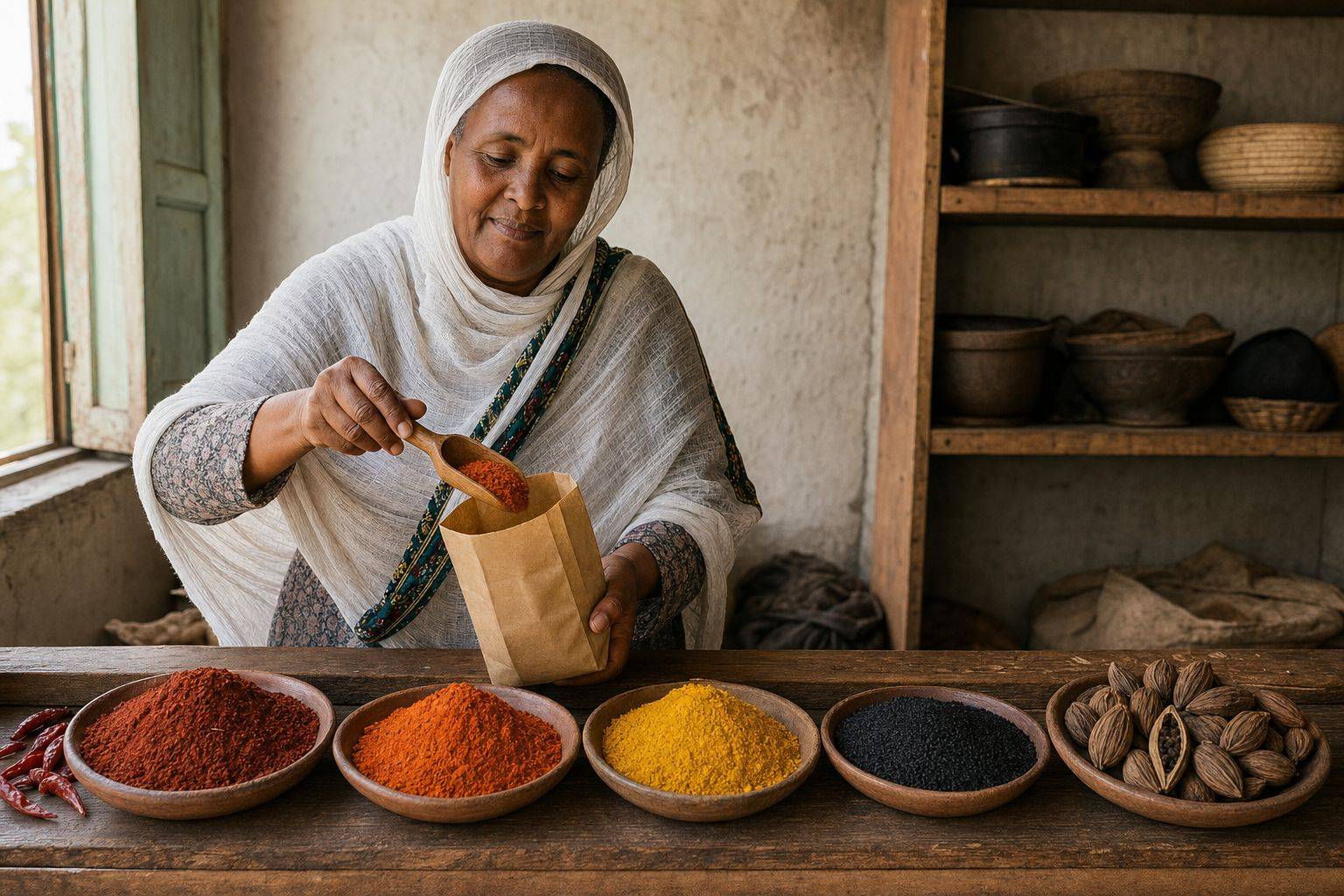
Original AI generated hero image representing the colour and variety of an Ethiopian spice counter.
Two bowls of red powder can look almost identical and behave very differently in a pot. One may be a rounded berbere blend intended for a slow stew. The other may be mitmita, used in a much smaller amount because its chilli heat arrives quickly. Colour alone will not tell you which is which.
Ethiopian cooking uses heat, but chilli is only part of the story. Aroma comes from seeds, roots, herbs, onion, garlic, and patient cooking. Blends also vary by household, region, crop, and seller. A beginner needs a useful map, not one supposedly official recipe.
Berbere
Berbere is the best known Ethiopian spice blend. Dried red chilli provides heat and colour, while ingredients such as ginger, garlic, fenugreek, korarima, coriander, cloves, cinnamon, rue, black pepper, or other spices may add depth. The exact combination and proportion vary.
An open access study of the dried berbere chilli value chain in northern Ethiopia found that households mixed chilli with different local spices according to experience and tradition. That supports an important point: berbere is a category with family and regional expressions, not one fixed formula.
Use berbere in red stews such as misir wot or other wot preparations. Begin with less than a recipe suggests if you do not know the blend. You can add more after it cooks into the sauce, but you cannot easily remove it.
Mitmita
Mitmita is usually hotter and more direct than berbere. It is a fine red blend commonly built around hot chilli, korarima or cardamom like spice, and salt, with other additions depending on the maker. It may season raw or cooked meat dishes, appear at the table, or add heat to a small portion.
Do not exchange equal amounts of mitmita and berbere. A spoonful of one blend may be much hotter or saltier than the same spoonful of another. Taste a tiny pinch only if you are comfortable with chilli, and keep the powder away from your eyes.
For a beginner pantry, mitmita is optional. Berbere has broader everyday use. Buy mitmita later when you know why a recipe needs its sharper heat.
Korarima
Korarima is often called Ethiopian cardamom, although it is not the same as the green cardamom common in South Asian cooking. Cooks use the dried seeds in blends, stews, clarified butter, and sometimes coffee. The aroma can feel smoky, warm, and slightly earthy.
Ethiopian Biodiversity Institute and agricultural research sources document korarima as an important indigenous spice associated with Ethiopia and nearby areas, though the botanical spelling varies between references, so treat any scientific name you see attached to it as approximate rather than settled.
Buy whole pods or seeds when possible and smell them. Old korarima can lose much of its aroma. Grind only what you need, then close the container quickly.
Mekelesha
Mekelesha is a finishing spice blend added near the end of cooking to refresh aroma. It may include warming spices such as korarima, cinnamon, cloves, black pepper, cumin, or other ingredients. Once again, there is no universal household formula.
The timing is what makes it useful. A long cooked stew develops depth, but some fragrance fades. A small final addition can lift the sauce without making it taste raw. Add a little, stir, simmer briefly, and taste.
Ask a seller what their mekelesha contains. That question is more useful than assuming the name guarantees one recipe.
Turmeric
Turmeric gives many alicha dishes their yellow colour. It appears in mild split pea stew, cabbage and potato dishes, and other preparations. Its role is colour and earthy flavour rather than chilli heat.
Too much can make a dish bitter or dusty. Cook it briefly with onion and oil before adding liquid. Pair it with ginger, garlic, and other aromatics rather than treating it as the only seasoning.
Fenugreek
Fenugreek seeds contribute a slightly bitter, nutty, and maple like aroma to some Ethiopian blends and sauces. The flavour is powerful. Toasting must be gentle because burnt fenugreek becomes harsh.
Ground fenugreek can appear in berbere and other preparations. Store it well sealed since the smell travels easily through a cupboard.
Tikur azmud and nech azmud
Spice naming creates confusion across languages. Tikur azmud is commonly associated with black cumin or nigella, while nech azmud may refer to a different pale seed such as ajwain or a cumin related spice depending on local usage. English translations are not always consistent.
Do not treat a simple one word English equivalence as settled without checking the actual seed and local name yourself. Photograph the product, ask the seller, and confirm with an Ethiopian botanist or food specialist if precision matters to you.
In the kitchen, these seeds may season breads, pulse dishes, or blends. Use the ingredient in front of you rather than relying only on an English label.
Koseret
Koseret is an aromatic Ethiopian herb, often linked with the cultivated form of Lippia adoensis. It is known for its role in seasoning niter kibbeh and other preparations. The dried leaves have a distinct herbal scent that should still be noticeable when you open the package.
Ethiopian Biodiversity Institute material distinguishes a cultivated variety locally known as koseret, but the botanical details and English spelling are inconsistent enough across sources that any scientific claim about it deserves its own check before you repeat it.
Because niter kibbeh is clarified butter, it is not suitable for Orthodox fasting food or vegan meals. The herb itself is a plant ingredient, but the finished butter is not.
Besobela
Besobela is commonly described as Ethiopian sacred basil and is used in spice mixes and seasoned butter. Its aroma differs from standard fresh sweet basil. Dried leaves can add a warm herbal note.
Names and species identification vary across casual sources, so treat any scientific name here as unsettled. A local seller can explain culinary use, while a botanical source should confirm the actual name.
Shiro powder is more than spice
Shiro powder belongs in this guide because beginners often find it beside spices, but it is mainly a prepared pulse flour blend. Chickpeas, peas, beans, or a combination may be milled with seasonings. The cook turns it into shiro stew with water, onion, oil, and aromatics.
Different powders produce different colour, heat, and thickness. Read packaged ingredients or ask the miller. Someone with a pulse allergy or strict dietary need cannot judge the formula by sight.
Onion, garlic, and ginger do major work
A bag of excellent berbere cannot rescue rushed onions. Many Ethiopian stews begin by cooking chopped onion until moisture reduces and flavour concentrates. Oil or butter and aromatics then build the base before liquid and the main ingredient enter.
Garlic and ginger bring freshness and bite. Add them at the right moment so they cook without burning. Spice is a process, not just powder measured from a jar.
Build a small beginner pantry
Start with four items:
- A small packet of berbere from a trusted seller.
- Turmeric for mild alicha dishes.
- Whole or freshly ground korarima for aroma.
- A small mekelesha blend for finishing.
Add mitmita only if you enjoy serious chilli heat. Buy koseret, besobela, fenugreek, or other seeds when a specific recipe calls for them. A small fresh collection is better than a large cupboard of fading powder.
Label purchase dates. Keep spices dry, cool, sealed, and away from direct sun. Do not hold a wet spoon over the container. Moisture encourages clumping and spoilage.
Buying at a market
Ask the seller what is in a blend, how hot it is, when it was ground, and which dish they recommend. Buy a small amount first. If possible, compare aroma from two sellers without touching the product.
Look for clean storage, dry powder, and protection from dust and moisture. Research from northern Ethiopia has raised concerns about postharvest handling and mycotoxin exposure in dried chilli. That does not mean every market spice is unsafe, but it supports buying from a careful source and storing the product properly.
Packaged spice is not automatically better. Check the seal, ingredient list, producer information, and date. Market and packaged products both require judgment.
Cook without wasting the blend
For a first red lentil stew, cook onion patiently, add oil, then garlic and ginger. Stir in a modest amount of berbere and keep the heat controlled so it does not scorch. Add lentils and water, simmer until soft, then adjust salt and finish with a small pinch of mekelesha if desired.
Write down the amount and brand or seller. The next time, change one thing only. That is how you learn a blend instead of blaming the whole recipe.
Common mistakes
The first mistake is treating berbere as pure chilli powder. The second is replacing it spoon for spoon with mitmita. The third is making health claims about spices without reliable evidence.
Another mistake is insisting on one authentic formula. Family recipes can be precise and meaningful without being universal. Ask whose blend it is, where it comes from, and what dish it was made to season.
What to buy first
Buy a small amount of good berbere and cook it twice. Then add turmeric and korarima. Learn how each smells before mixing everything together. When you can tell heat from aroma and base seasoning from finishing spice, Ethiopian recipes become much easier to understand.
Use the spices in context through our guide to popular Ethiopian dishes and Orthodox fasting food guide. If you are ordering out rather than cooking, the vegan fasting foods guide covers how to find and order these dishes at a restaurant. If you want to cook the bread that carries those stews, use the home injera guide.