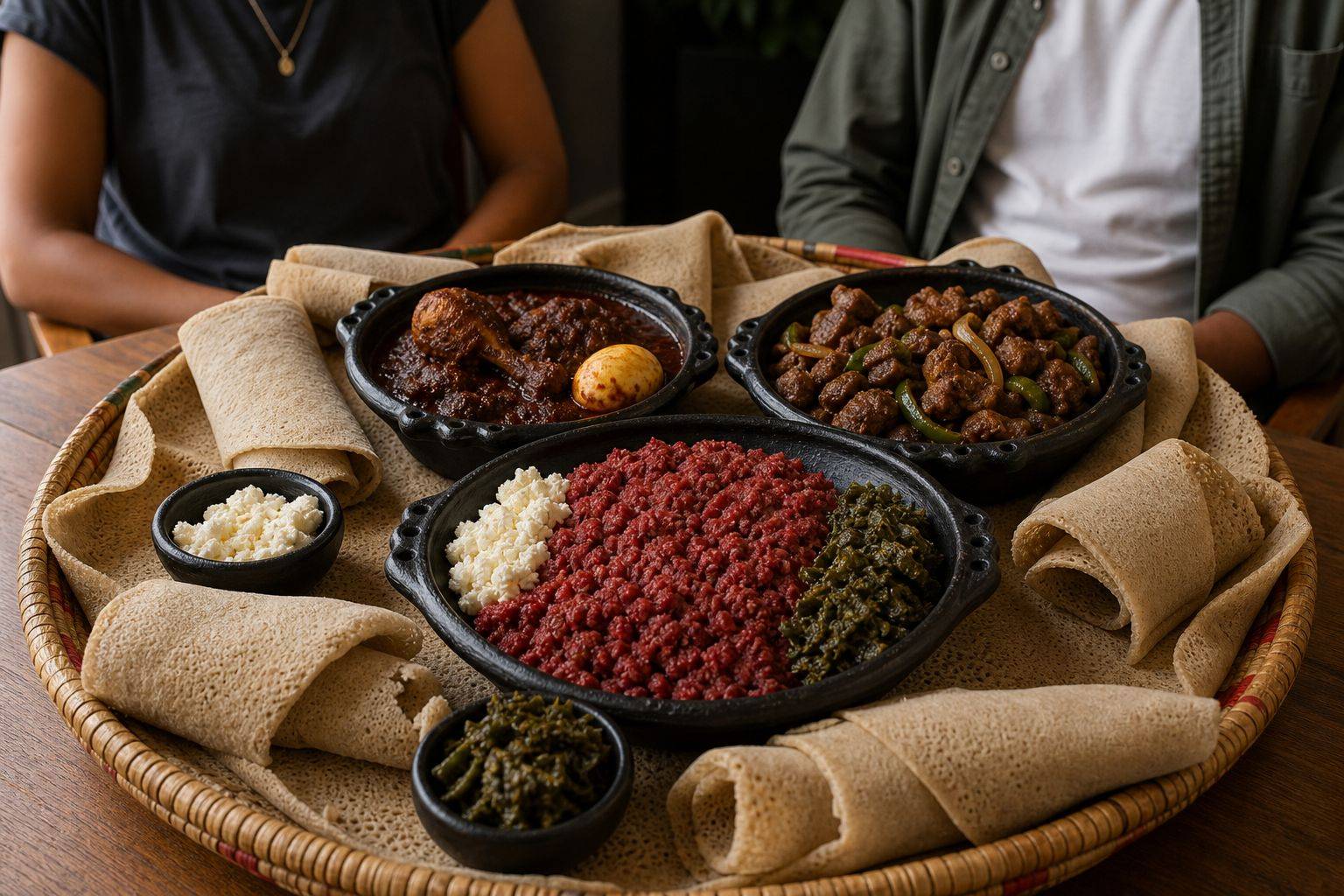
 Doro wot, tibs, and kitfo show how different one Ethiopian table can taste.
Once you know injera is the base and wot means stew, an Ethiopian menu stops being intimidating and starts being a set of choices. If those two words are new to you, the beginner’s guide to Ethiopian food covers the basics first. Ethiopia is large and its food varies by region and community, so the same dish name can taste noticeably different depending on where it is made, but the dishes below are the ones you will run into on almost any general menu, from a family home to a busy restaurant. Here are the ones you will run into most, what they are, and who tends to love them.
Doro wot
The famous one. Doro wot is a deep, spicy chicken stew cooked slowly with onions, berbere, and spiced butter, almost always served with a boiled egg. The onions are the real work behind it: a proper doro wot starts with a large amount of onion cooked down slowly, sometimes for an hour or more, before the berbere and chicken go in, which is part of why a good version tastes so much richer than a rushed one. It is rich and a little fiery, and it is the dish that shows up at celebrations and holidays, most of all at Ethiopian New Year and Easter. If you try one classic wot, make it this.
Tibs
Tibs is sauteed meat, usually beef or lamb, cooked with onion and peppers and sometimes rosemary. It ranges from mild to spicy and from saucy to dry, and different regions and households have their own style, some closer to a stir fry, others closer to a rich, oily saute. Because it is not a slow stew, it feels more familiar to newcomers, which makes it a great early order. It is also commonly ordered as a shared plate over a drink rather than a full meal on its own, so do not be surprised to see it on a bar menu as much as a restaurant one. Variations are common on most menus.
Shiro
Shiro is a smooth, savory stew made from ground chickpeas or other legumes, simmered with spices. It is mild, comforting, and a genuine everyday staple across the country, the kind of dish many people cook at home on an ordinary weeknight rather than saving for guests. It is also naturally vegan, so it appears on fasting menus, and it is often the cheapest thing on a menu without being any less satisfying. Many people who try Ethiopian food end up loving shiro fastest.
Kitfo
Kitfo is minced beef seasoned with mitmita and niter kibbeh (spiced butter), traditionally served raw or very lightly warmed. It is rich and prized, and often eaten with a crumbly cheese called ayib and a side of greens, which help balance the richness of the meat. If raw meat is not for you, ask for it leb leb, cooked through, or fully cooked, which most places will happily prepare. It is one of the country’s most loved dishes, closely associated with the Gurage community though widely available everywhere.
Gored gored and other raw or lightly cooked beef
Alongside kitfo, you may see gored gored, cubed raw or lightly seared beef served with spiced butter and berbere on the side for dipping. It is a close relative of kitfo in spirit, cubes instead of mince, and it shows up on similar occasions. As with kitfo, it is fine to ask for a cooked version if raw meat is not something you want to try yet.
Beyaynetu
Beyaynetu is not a single dish but a platter of many: several stews and vegetable sides arranged together on injera. It is the best way to taste widely in one order, and in its vegan form it is the standard meal for fasting days. Order this when you cannot decide.
Firfir and dishes for breakfast
Firfir is shredded injera tossed with sauce, spices, and sometimes bits of meat, a hearty and popular breakfast, and a good use for injera you made yourself if you have tried making it at home. You will also see ful, a seasoned fava bean dish eaten with bread, common in the morning, and chechebsa, torn flatbread mixed with spiced butter and berbere, another common start to the day.
Dulet
Dulet is a finely chopped dish of tripe, liver, and other organ meat, cooked with peppers, onion, and spiced butter. It is spicier and more intense than tibs and less familiar to newcomers, but it is a genuinely popular order, especially in the evening, and worth trying once you are comfortable with the milder dishes.
The vegetable sides
The vegan sides are half the meal and worth knowing, and they are also where Wednesday and Friday fasting food (see the Orthodox fasting food guide) really shows its range:
- Misir wot is spiced red lentils, usually the spiciest of the vegetable sides.
- Kik alicha is mild yellow split peas, cooked without berbere so it stays pale and gentle.
- Gomen is collard greens, often cooked with garlic and a little oil rather than a heavy sauce.
- Atkilt is cabbage, carrot, and potato, usually mild and lightly spiced with turmeric.
- Tikil gomen and other seasonal vegetables round out a platter.
A full beyaynetu platter usually mixes several of these with one or two meat stews if it is not a fasting version, so you get the spiced and the mild side by side on the same injera.
How the meal is actually eaten
Ethiopian food is eaten by hand, using torn pieces of injera to scoop up the stew rather than cutlery. It is normal, not informal, to eat this way even at a nice restaurant. A common gesture worth knowing is gursha, where someone at the table feeds you a bite by hand as a sign of affection or respect. If it happens to you, it is a genuine compliment, and the polite response is simply to accept it.
Mild or spicy? A quick guide
- Milder: shiro, alicha dishes, atkilt, kik alicha, tibs (ask for mild).
- Spicier: doro wot, key wot, kitfo with mitmita, dulet, anything heavy on berbere.
Order mild first if you are unsure, then push into the heat once you know your tolerance.
Common mistakes
- Assuming every dish is fiery. Many are gentle.
- Skipping shiro and the vegetable sides because they are “just sides.” They are some of the best food.
- Ordering kitfo or gored gored raw without knowing, then being surprised. Ask for leb leb or fully cooked if you prefer it that way.
- Trying to order one of everything on the first visit. Start with a beyaynetu.
- Reaching for cutlery out of habit when injera is sitting right there. Using your hand is normal and expected.
- Refusing a gursha if someone offers you one. It is meant kindly, and turning it down can feel like a small rejection.
Bottom line
Learn six names and you can order confidently anywhere: doro wot, tibs, shiro, kitfo, beyaynetu, and misir wot. Start mild, use a beyaynetu to explore, and build your favorites from there. Each of these deserves its own plate over time, and a proper meal here usually ends with coffee, not a menu item you will want to skip.